Most power surges in Geneseo stem from thunderstorms, utility switching and aging distribution lines, so your home experiences sudden voltage spikes that can destroy electronics and increase fire risk. You should understand how long runs of overhead wiring, frequent storms, and large appliance cycling amplify surges, and how installing whole-house surge protectors, proper grounding and point-of-use devices can protect your devices and lower repair costs.
Power surge basics
What a power surge is (types and characteristics)
You encounter two dominant surge categories: short, high-energy spikes from lightning or switching and longer overvoltages from faults or large motor starts. Spikes last microseconds to milliseconds and can reach thousands of volts, while switching events produce hundreds of volts for 10-100 ms; equipment rated for ±10% of nominal voltage can fail when exposed to these pulses. Assume that a lightning-induced transient can exceed 6,000 V at your service entrance and overwhelm unprotected electronics.
- Power surge – sudden voltage increase above nominal
- Spike – very fast, high-voltage transient (µs-ms)
- Overvoltage – sustained elevation (ms-s) from faults
- Transient – general term for short-duration events
- Surge protector – device that clamps/diverts excess energy
| Internal (motor starts) | +10-30% voltage, 10-50 ms, nearby appliance impact |
| External (utility switching) | hundreds to >1,000 V, 1-100 ms, affects multiple homes |
| Lightning-induced | thousands to >10,000 V, µs-ms, very high energy |
| Harmonic/oscillatory | repeated high-frequency components, degrades electronics over time |
| Sustained overvoltage | seconds to minutes, can overheat wiring and appliances |
How surges travel through a home’s electrical system
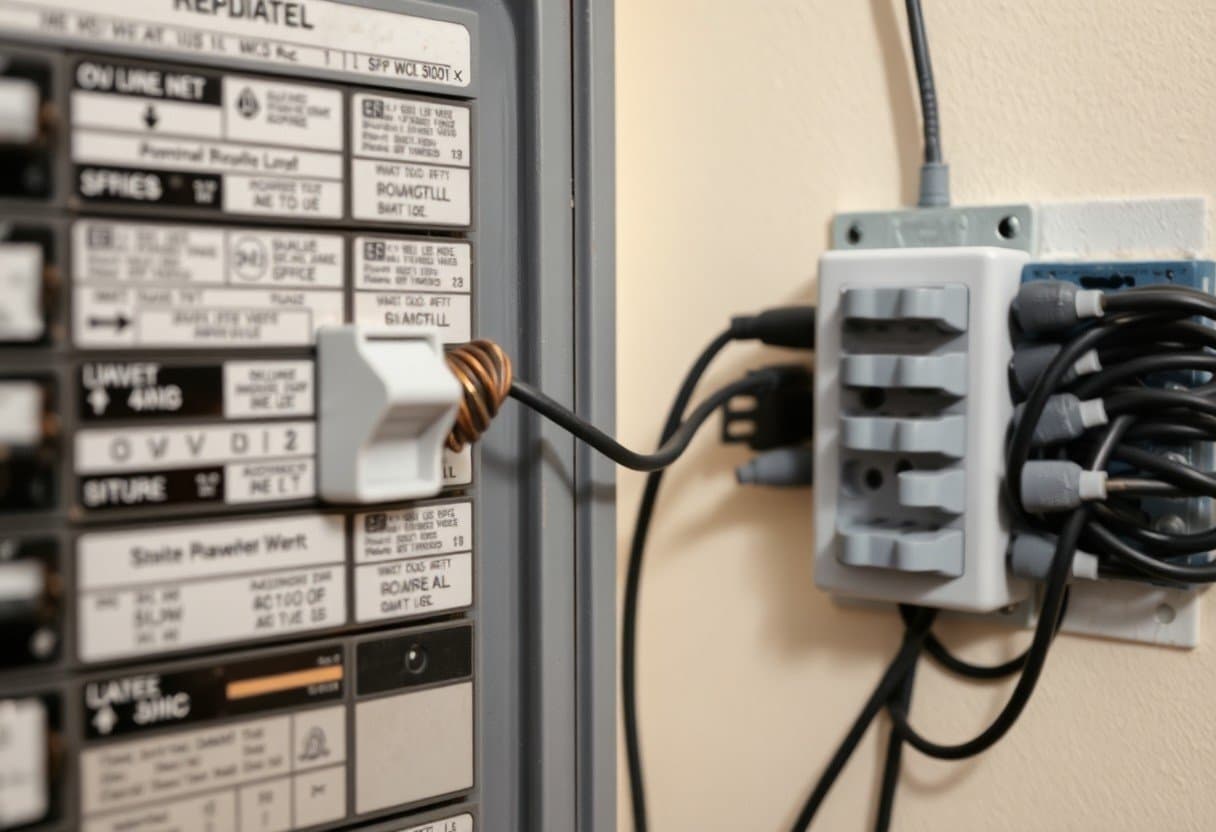
Surges enter through the service drop into your meter and panel and then propagate along the hot, neutral, and ground conductors into branch circuits, reaching sensitive electronics in milliseconds; split-phase 120/240 V systems let energy transfer line-to-line or line-to-neutral, and improper grounding raises the likelihood of equipment damage. Installing a whole-house SPD at the panel materially reduces the energy reaching your outlets and devices.
Current follows lowest impedance, so when a transient hits the service entrance it splits between line-to-line, line-to-neutral and line-to-ground paths-often dumping through the neutral or grounding conductor if those paths are lower impedance. For example, a 2,000 V transient from a nearby switching event can deliver hundreds of joules into your panel within microseconds and destroy power supplies in HVAC controls, TVs, and LED drivers. You can mitigate this by combining a Type 1/2 SPD at the service or meter with point-of-use Type 3 protection for sensitive electronics and by ensuring proper bonding and low-impedance grounding at your panel.
Common causes affecting Geneseo homes
Utility grid events and local infrastructure
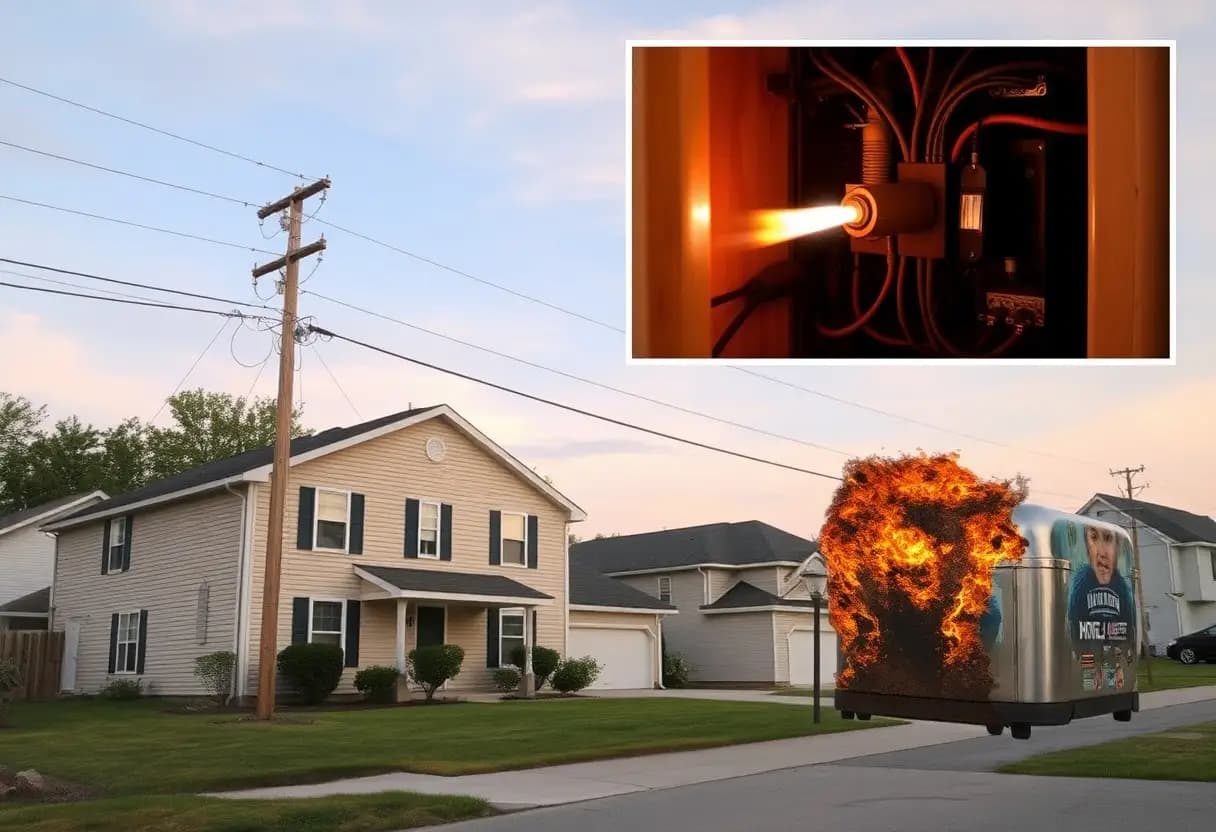
You face surges from transformer failures, capacitor switching, and upstream faults on the distribution network; these events can generate short-duration voltage spikes lasting microseconds to milliseconds and sometimes reach thousands of volts. Aging poles and single-feed lines in parts of Geneseo increase the chance of backfeed during restoration, so installing a whole-house surge protector and coordinating with your utility reduces exposure.
Weather, trees, and seasonal risks in Geneseo
You deal with summer lightning, late‑season windstorms, and winter ice that topple branches onto lines, producing outages followed by damaging surges when power returns; fallen trees and broken service drops are a leading cause of local events, and neighborhoods with mature shade trees show higher incident rates. Prioritizing surge protection protects sensitive electronics when the grid is re-energized.
In Geneseo, mature street trees close to overhead lines mean you should expect seasonal problems-spring storms with lightning and June microbursts, plus ice accumulation in winter-each increasing the likelihood of downed lines and equipment damage. You can reduce risk by keeping a 10-15 foot clearance from conductors, scheduling tree trimming every 3-5 years in older lots, and working with your utility to mark service routes before pruning to prevent accidental outages and subsequent surge events.
How surges damage home systems
Surges deliver brief bursts of energy far above your normal 120 V, often traveling in the thousands of volts and through phone, coax, and grounding paths, so a single event can create simultaneous failures across devices. You’ll see immediate blowouts in power supplies and latent degradation in semiconductors that fail weeks or months later. In practical terms, repeated smaller surges quietly shorten component life while large events cause instant, costly damage to multiple systems at once.
Electronics and appliance failure mechanisms
Power spikes overwhelm surge suppressors and fry sensitive circuits: metal-oxide varistors (MOVs) heat and degrade after repeated hits, electrolytic capacitors bulge or short, and microcontrollers suffer gate oxide rupture. You can watch a $400 TV or a $200 router fail within milliseconds, while refrigerators and smart thermostats incur board-level damage that voids warranties. Surge protectors rated 600-2,000 joules help, but their protection drops as they absorb energy.
Wiring, motors, and fire risk
Inductive loads like compressors and motors generate large back-EMF and can force currents that stress windings and insulation; you face arcing and hot spots where insulation breaks down. Arcing faults can reach extreme temperatures and ignite nearby materials, turning an electrical surge into a structure fire. You should treat damaged motors or repeated breaker trips as signs of deeper surge-induced wiring problems.
Surges travel across branch circuits and concentrate at weak points-loose connections, aging splices, or compromised insulation-raising local heat by P=I²R and accelerating wear. Installing a layered defense (a Type 1 service-entry SPD, a Type 2 panel protector, and Type 3 point-of-use devices) reduces energy reaching motors and wiring. If a motor winding degrades, you risk locked-rotor draws that trip breakers and sustain overheating; replacing an HVAC compressor after surge damage can cost $2,000-$5,000, so preventive SPDs at the panel are often the most cost-effective step.
Which devices are most vulnerable
Surges most often damage devices with sensitive electronics or long runs of wiring; you’ll notice TVs, PCs, NAS boxes, routers, smart thermostats, and outside units failing first. A lightning-induced transient can reach thousands of volts, while everyday switching surges can still exceed component tolerances. In Geneseo homes, older wiring or poor grounding multiplies risk, so your high-value gear and major appliances face both immediate damage and silent degradation over time.
High-value electronics and smart-home gear
Your 4K TV, gaming consoles, desktop PCs, smart speakers, and NAS drives contain delicate power supplies and microcontrollers; surges of just a few hundred volts can fry circuits or corrupt data. Point-of-use strips are often rated 600-4,000 joules, which handles moderate spikes but can be overwhelmed by larger transients. If you store family photos or business files on a NAS, a single event can cause irreversible data loss and expensive device replacement.
HVAC, refrigerators, and major appliances
Your HVAC outdoor units, refrigerator control boards, and other major appliances rely on motor controllers, contactors, and capacitors that are vulnerable to voltage spikes. A surge can burn out a control board or start winding failures in compressors, leading to repair bills in the $200-$1,000+ range and potential premature equipment replacement. Long exterior cable runs and exposed disconnects raise the likelihood of induced damage to these systems.
Failures often present as erratic cycling, tripped breakers, or non-starting compressors, with control-board replacement the most common repair. Protect your systems by installing a whole-home surge protector at the service panel (ratings typically span 20-100 kA surge current capacity and hundreds-thousands of joules) and adding a local HVAC-specific suppressor at the condenser disconnect; technicians can also fit line filters and surge-rated disconnects to reduce repeat service calls and extend component life.
Prevention and protection strategies
Point-of-use surge protectors and best practices
Choose point-of-use protectors rated for at least 600-2,000 joules with a low clamping voltage (around 330V) and response times under a nanosecond. Plug your modem, TV, PC, and home-office gear into quality strips with UL 1449 certification and MOV+thermal protection; replace strips every 3-5 years or immediately after a visible surge event. Keep power-hungry appliances on dedicated outlets, avoid chaining multiple strips, and expect retail prices of roughly $20-$80 for reliable units.
Whole-house surge protection, grounding, and lightning considerations
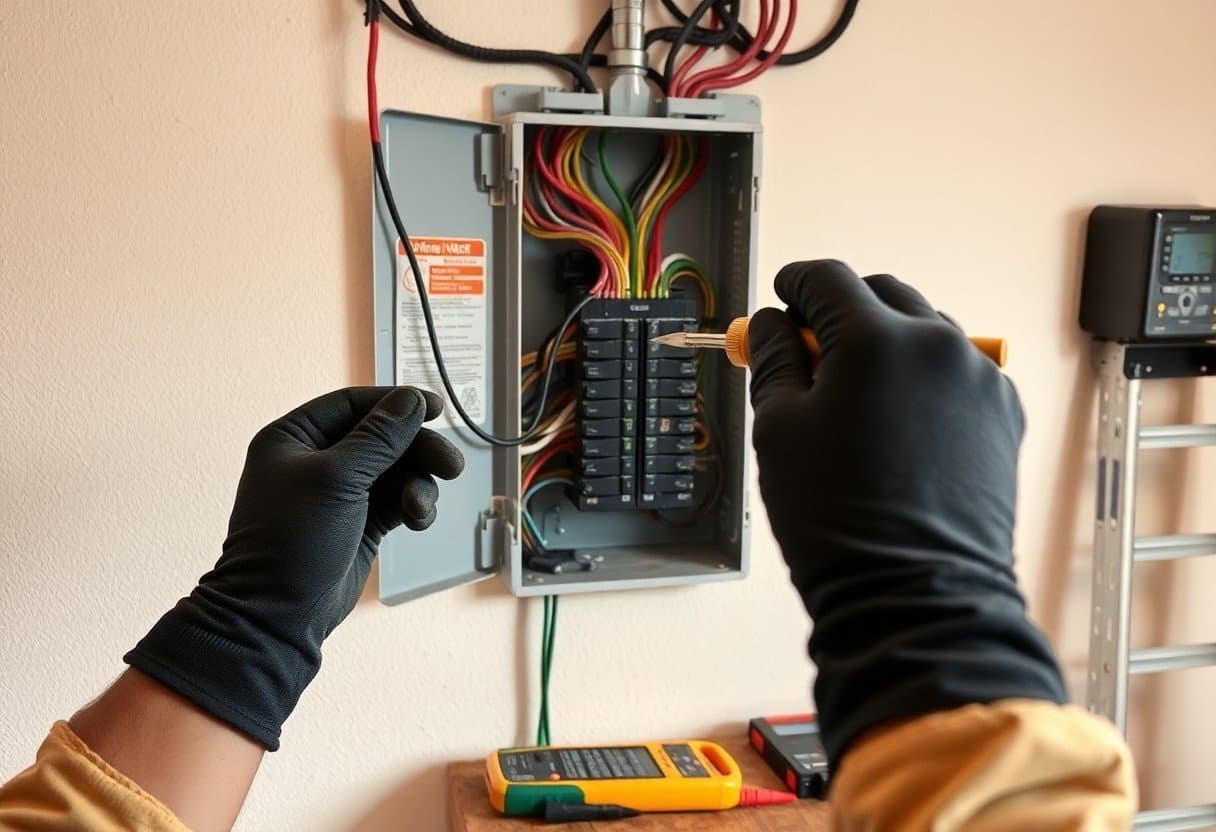
Install a Type 1 or Type 2 SPD at the service entrance or main panel to intercept utility and lightning-borne transients before they enter branch circuits; these devices commonly handle tens of kiloamperes and cost about $300-$1,200 plus labor. Have a licensed electrician mount the SPD on the line side when possible, coordinate it with downstream point-of-use units, and ensure breakers and meter placement minimize lead lengths to reduce let-through voltage to your equipment.
For grounding and lightning, bond the service, panel, cable, and water grounds into a single electrode system and aim for low impedance (testing for ground resistance under 25 Ω where feasible). Improper or separate grounding can make surges worse, since lightning currents often reach tens to hundreds of kiloamperes; driven ground rods, chemical electrodes, or concrete-encased (Ufer) electrodes improve dissipation. Add air terminals and dedicated down-conductors only as part of a complete lightning protection system, and schedule annual inspections and SPD end-of-life checks to keep protection effective.
Choosing, installing, and maintaining protection
Sizing, ratings (joules, clamping voltage), and certifications
You should size SPDs by expected exposure: point-of-use units often run 600-3,000 joules while whole-home devices commonly exceed 1,000-6,000 joules. Prioritize lower clamping voltage (e.g., 330-400V on 120V circuits) and choose devices with UL 1449 (4th ed.) or IEC 61643-11 listings and the proper Type 1/Type 2 classification for service-entrance versus load-side protection.
Professional installation, inspection, and ongoing maintenance
You should have a licensed electrician install SPDs at the service panel or subpanel to ensure proper bonding, grounding, and NEC/local-code compliance; typical installation costs run about $200-$700. Check the unit’s status lights during annual inspections and replace SPDs after a major surge or when indicators show failure to avoid hidden vulnerability.
During installation your electrician will evaluate the main lug or breaker space, mount a Type 1 unit at the meter or a Type 2 on the load side depending on lightning exposure and service configuration, and confirm the ground electrode system has low impedance-many pros aim for under 25 ohms when feasible. They will torque connections to spec, coordinate upstream/downstream SPDs to prevent nuisance events, install thermal or fuse disconnects where required, and label protected circuits; manufacturers typically recommend replacing MOV-based SPDs after sustained surge activity or every 3-10 years, and you should keep installation dates, test readings, and indicator-status logs for insurers and future inspections.
Final Words
With these considerations, you should recognize why power surges affect Geneseo homes: aging wiring, long rural overhead lines, seasonal storms, and inadequate grounding increase vulnerability, and your sensitive electronics and appliances can be damaged unless you install whole-house surge protection, maintain grounding, and adopt safe usage and maintenance practices.