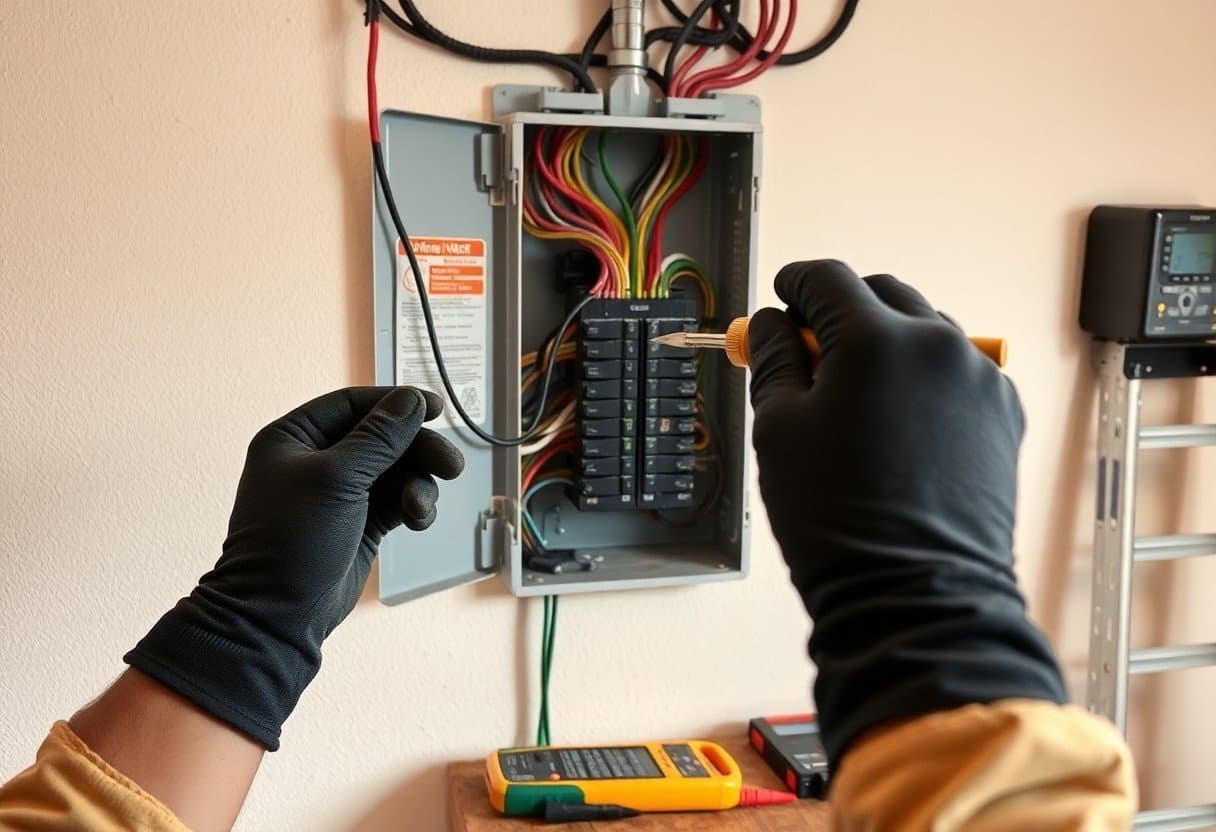
Overloading your circuits is often the first sign that your Geneseo home’s electrical system needs attention; frequent breaker trips may indicate an electrical hazard such as a short, overloaded circuit, or deteriorating wiring, which raises fire risk. You should treat repeated trips as a warning and call a licensed electrician to diagnose the issue and recommend repairs or a panel upgrade to restore safe, reliable service.
How Circuit Breakers Work
Basic function and common breaker types (standard, GFCI, AFCI)
You rely on breakers to interrupt abnormal currents: a standard (thermal-magnetic) breaker handles sustained overloads and instantaneous short circuits, a GFCI detects tiny leakage to ground (~5 mA) and trips fast to prevent shock, and an AFCI senses arcing signatures to stop fire-starting arcs; testing and correct placement (bathrooms, kitchens, bedrooms) matter. Thou test GFCIs and inspect for heat, charring, or repeated nuisance trips.
- Standard (thermal-magnetic)
- GFCI
- AFCI
- Double-pole / 240V
| Breaker Type | Primary function & typical use |
| Standard (thermal-magnetic) | Protects branch circuits (15A, 20A); thermal element trips on prolonged overload, magnetic trips on short circuits |
| GFCI | Monitors imbalance >≈5 mA; required at wet locations (kitchen, bathroom, garage) |
| AFCI | Detects arcing waveforms to prevent electrical fires; common in bedroom and living areas |
| Double-pole / 240V | Handles high-demand appliances (dryer, range); ties two poles to prevent backfeed |
What “tripping” actually indicates electrically
When a breaker trips, it signals one of three electrical events: a sustained overload raising conductor temperature, a short circuit that can push currents into the hundreds or thousands of amps, or a ground or arc fault that creates dangerous leakage or arcing; you should treat any repeated trip as a sign of an underlying fault rather than a nuisance.
Delving deeper, thermal-magnetic breakers use a bimetal strip that bends with heat for overloads and a magnetic coil for instantaneous short-circuit trips; typical residential circuits are 15-20 A, so a sustained 30-40% overload over minutes can trip the thermal element, while a direct short produces a surge that the magnetic element clears in milliseconds. GFCIs sense imbalance of about 4-6 mA and often trip within 25-50 ms to protect people, whereas AFCIs analyze high-frequency signatures and sequences of current to distinguish harmless switching from dangerous series or parallel arcing. In homes built before modern codes – like many Geneseo houses – shared neutrals, undersized wiring, or degraded insulation increase the likelihood that legitimate faults will cause repeated trips; diagnosing requires you to isolate circuits, test suspicious appliances with an amp clamp, and, when fault currents or repeated arcing are suspected, engage a licensed electrician to perform insulation resistance tests and panel-level fault current measurements.
Typical Causes of Frequent Trips in Geneseo Homes
Overloaded circuits from modern appliance use
With more electronics and high-draw devices in your home, circuits rated for 15A or 20A are easily pushed past capacity: a 1,500W space heater draws ~12.5A, a 1,800W hair dryer ~15A, and a toaster or microwave adds another 8-12A. When you run multiple heavy loads on one circuit, the breaker will trip to prevent overheating; in older Geneseo homes, lack of dedicated circuits for HVAC, kitchen ranges, or electric dryers amplifies that risk.
Short circuits and ground faults
A short circuit happens when hot and neutral contact directly, producing a sudden surge that causes an immediate trip, while a ground fault diverts current to earth and often trips GFCI devices; you’ll notice sparks, pops, or a burning smell before a breaker reacts. These faults are common where insulation is damaged, outlets are loose, or metal boxes are compromised.
Frayed insulation rubbing against a screw, a nail driven through wiring during remodeling, or rodent-chewed conductors are typical culprits. Fault currents can reach thousands of amps locally, so breakers trip in milliseconds; GFCIs will trip on leakage as low as about 4-6 mA, and lack of AFCI protection in older panels lets dangerous arcing go undetected until a visible fault occurs.
Seasonal and environmental contributors (moisture, humidity, frozen lines)
Changing seasons in Geneseo bring moisture and temperature swings that affect electrical reliability: humid basements and wet junction boxes increase leakage and GFCI trips, while winter freezes can crack conduit or cause outdoor receptacles to short when ice forms. Snowmelt entering attic or exterior fixtures is a frequent, often hidden trigger for repeated trips.
When moisture lowers insulation resistance, even microamps of leakage can accumulate and trip protective devices; condensation on HVAC coils or pool equipment often causes intermittent ground faults. Freezing cycles also make wire insulation brittle and connections loosen as materials expand and contract, raising the chance of arcing and repeated breaker action.
Age-related wiring, degraded insulation, and pests
Homes with original wiring-knob-and-tube (pre-1950s), cloth-covered (through mid-20th century), or aluminum wiring (commonly used in the 1960s-70s)-face higher trip frequency because insulation degrades over decades and connections loosen. You may also find rodents have chewed insulation, creating fire and shock hazards that cause unpredictable trips.
Insulation typically becomes brittle after 40-70 years, exposing conductors and creating leakage paths; aluminum conductors expand and contract more than copper, causing loose terminals and arcing unless properly pigtail-repaired. In local case reviews, homes with vintage wiring often show repeated nuisance trips that only stop after targeted repairs or full rewiring to modern standards.
Diagnosing and Troubleshooting
Safely identifying the affected circuit and load sources
Start by checking your breaker panel labels and flip the suspected breaker fully off then back on to see which rooms lose power. Use a plug-in outlet tester or non-contact voltage tester to map outlets to that breaker. Unplug high-draw appliances-space heaters (~1,500W ≈ 12.5A), hair dryers (1,800W ≈ 15A)-and note which devices and receptacles drop out; mark any outlet with burn marks or loose wiring as dangerous.
Step-by-step homeowner checks (reset method, unplugging, isolating)
When a trip happens, you should switch the breaker fully off then on; if it won’t latch, leave it off. Unplug every device on that circuit, reset the breaker, then plug items back one at a time to isolate the offender. Test heavy loads separately-microwave, window AC, space heater-since a 15A circuit trips near 15 amps; keep a written log of which appliance caused the trip.
Use a clamp meter or plug-in power meter if you can to measure device draw; this helps when multiple moderate loads together exceed circuit capacity. Also check any GFCI or AFCI protection on that circuit, as those devices can trip for ground faults or arcs even when total amperage looks low.
Quick homeowner troubleshooting
| Action | Why / How |
|---|---|
| Reset breaker (Off → On) | Confirms the breaker can reset; won’t stay on means persistent fault or overload. |
| Unplug all devices | Removes all loads so you can reconnect items one at a time to find the trip source. |
| Reconnect devices sequentially | Identifies the specific appliance or combination that causes overload. |
| Measure current draw | Clamp meter or plug meter shows amps; compare to circuit rating (15A/20A). |
| Test GFCI/AFCI | These protections trip for ground faults/arcing; reset and monitor behavior. |
| Stop if unsafe signs appear | Leave the breaker off and call a professional if you see smoke, sparks, or heat. |
Red flags that require immediate professional intervention
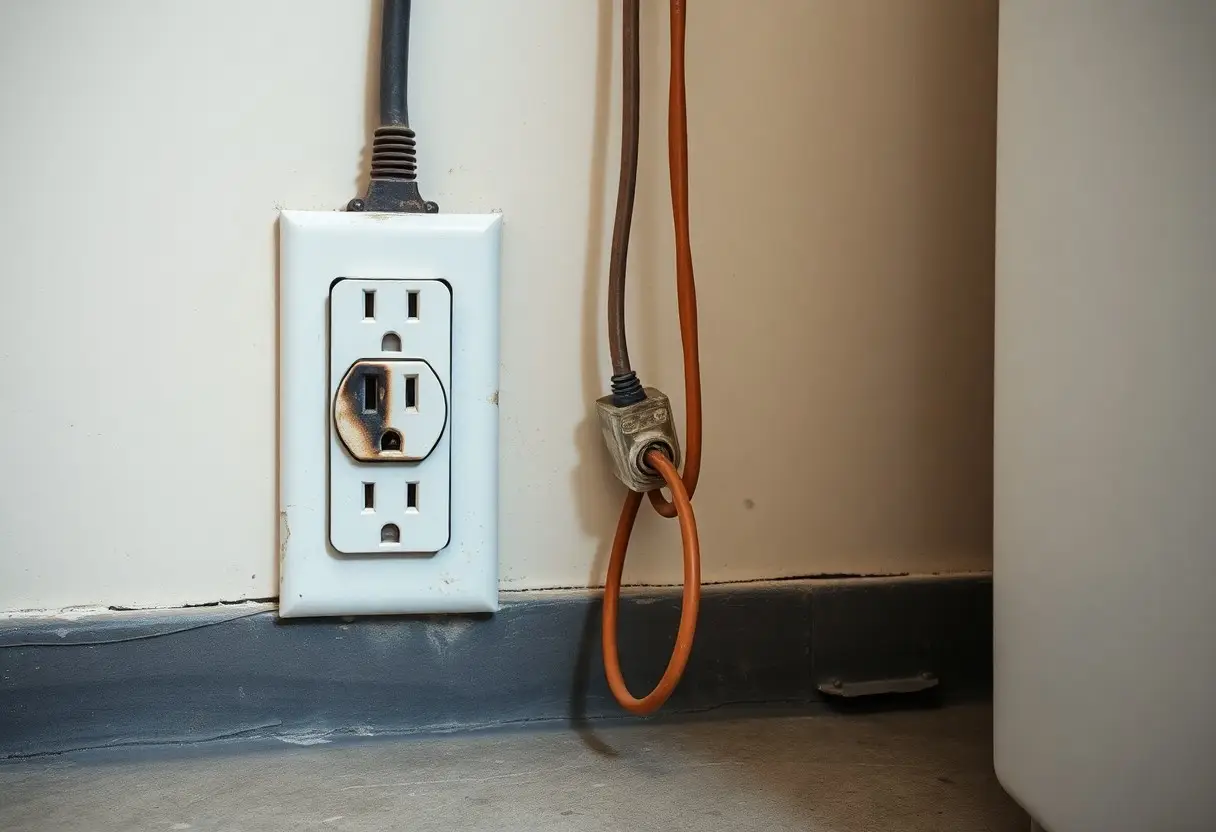
If you detect a burning smell, visible smoke, sparks from an outlet, charred or melted insulation, frequent trips with nothing plugged in, or a hot/buzzing panel, shut off the affected breaker and avoid using that circuit. Those signs point to arcing, loose connections, or overheating that can ignite within minutes and need a licensed electrician immediately.
For example, repeated trips with a warm breaker or scorched outlet often indicate a loose neutral or overloaded conductor; arcing faults can reach several hundred degrees and start fires quickly. If you see these signs, turn off the main if you suspect fire risk, photograph damage for the electrician, and contact a licensed pro without delay.
Safety, Repairs, and When to Call an Electrician
Immediate safety steps after repeated trips
If a breaker trips repeatedly, first unplug appliances on that circuit and reset the breaker only once; if it trips again, leave it off and avoid using that circuit. If you smell burning or see scorched outlets, shut off the main breaker and keep everyone away from the area. Use battery-powered lighting, avoid extension cords, and contact a licensed electrician-repeated trips often point to overload, short, or failing wiring that can start a fire.
What a licensed electrician will inspect and test
An electrician will perform a load calculation, check breaker sizing (15A, 20A, 240V banks) and trip characteristics, test for loose lugs, measure voltage and current with a clamp meter, scan with an infrared camera for hotspots, and test AFCI/GFCI operation. They’ll also check neutral and grounding continuity and look for signs of overheating or aluminum/knob-and-tube wiring that require replacement-these are common causes of repeated trips and hidden fire risk.
More specifically, your electrician will log amperage under normal load, verify voltage drop (typically should be under 3% for branch circuits), and apply insulation-resistance testing on suspect conductors. They may remove the panel cover to tighten connections to manufacturer torque specs, swap in a new breaker to isolate a faulty device, and inspect shared-neutral multi-wire circuits for improper balancing. Replacing degraded wiring or a damaged breaker can immediately reduce nuisance trips and lower long-term risk.
Permits, code compliance, and liability considerations in Geneseo
Panel changes, new circuits, and many repairs in Geneseo require a permit and an inspection under the adopted National Electrical Code; work done without permits can void warranties and insurance coverage. If you hire a contractor, ensure they pull permits and provide inspection receipts-failure to do so can leave you personally liable for damages or fines and may affect resale. Unpermitted electrical work jeopardizes insurance claims after an incident.
To protect yourself, ask the electrician to file the permit and schedule both rough and final inspections with Geneseo’s building department; inspectors will verify grounding, bonding, breaker labeling, and AFCI/GFCI where required. Typical inspection cycles verify compliance with NEC sections like branch-circuit protection and continuous-load limits (80% rule). Keep copies of permits and inspection reports-these documents are often required by insurers and by title companies when you sell.
Prevention and Recommended Upgrades
Load balancing, circuit reconfiguration, and labeling
You can reduce nuisance trips by redistributing heavy appliances across both legs of your split‑phase service and by moving continuous loads so no circuit exceeds 80% of its breaker rating. For example, place a window AC on the opposite leg from the kitchen microwave, and relocate high‑draw tools from a 15A lighting circuit to a 20A or dedicated line. Also use clear panel labeling and a simple load log so you and any electrician can spot imbalances quickly.
Panel upgrades, adding dedicated circuits, and installing AFCI/GFCI
When breakers trip repeatedly, consider upgrading panels that are 20-30+ years old, adding dedicated circuits for dryers, ovens, EV chargers, and installing AFCI/GFCI protection to reduce fire and shock risks. A dedicated 30A/40A circuit for a dryer or a 50A range circuit prevents shared‑circuit overloads, while AFCIs catch arcing faults and GFCIs respond to ground leakage, often stopping hazardous events before they escalate.
Many homeowners find a 100A→200A service upgrade resolves persistent capacity shortfalls; typical replacement ranges from roughly $1,200-$3,500 depending on local permits and meter work. You should expect electricians to test bus connections, replace rusted lugs, and install AFCI/GFCI breakers where code or safety calls for them; note that GFCIs trip at about 4-6 mA of leakage, protecting you from dangerous shocks.
Energy-efficiency and smart-monitoring options to reduce trips
You can cut peak loads and false trips by installing LEDs (a 60W incandescent → ~8-12W LED saves ~80%), smart thermostats that reduce HVAC cycling, and whole‑home or circuit monitors (brands like Sense or Emporia) to flag spikes. Smart plugs and timed schedules shift appliance use away from peaks, and simple fixes-LEDs, efficient water heaters, programmable HVAC-often eliminate the brief overloads that trigger breakers.
Using a submeter or smart monitor, you can identify a 2-4 kW appliance causing peak events and then apply demand‑shifting: charge an EV overnight, schedule a dishwasher post‑peak, or let a smart breaker shed nonimperative loads during high draw. Combining off‑peak scheduling, targeted LED retrofits, and circuit‑level monitoring gives you measurable reductions in trips and lowers your monthly demand.
Local Resources and Homeowner Checklist
Contacts: municipal inspection, local licensed electricians, utility guidance
Contact your village or county building department (Village of Geneseo or Livingston County Building Department) for permit and inspection requirements, and use the utility phone on your bill for outage/emergency guidance. When hiring electricians, ask for a current license number, proof of insurance and local references, and get a written estimate. If you detect a burning smell, arcing or visible damage, turn off power and call your utility or a licensed electrician immediately.
Quick homeowner checklist for addressing frequent breaker trips
Start by unplugging noncrucial devices and resetting the tripped breaker; note which circuits trip and when, check for warm outlets or burned marks, and verify breaker labels. Avoid running multiple 1,500 W space heaters on a single 15 A circuit (two would draw ~25 A). Photograph scorch marks, log appliance usage, and if trips persist after basic checks, stop using the circuit and schedule a licensed electrician.
When logging trips, record date, time, which appliances were running and whether lights dimmed; use that log to show an electrician patterns-continuous loads should stay under 80% of breaker rating (about 12 A on a 15 A breaker). If your panel is over ~30 years old, breakers are repeatedly failing, or you see arcing, plan for professional diagnosis and possible panel upgrade.
Conclusion
With these considerations you should view frequent breaker trips in Geneseo homes as indicators of potential wiring issues, overloaded circuits, or aging panels; you need to have a licensed electrician inspect your system, prioritize targeted repairs or upgrades, and balance loads to protect safety and preserve property value. Prompt, professional action reduces fire risk and avoids recurring outages.