Many local customers judge your business instantly, so if you lose trust you face reputation damage and falling sales, while building clear policies and reviews delivers higher conversions, so you must optimize trust signals to increase local conversions.
The role of trust in local conversion rates
Trust shapes how you judge nearby providers and directly influences whether you convert; visible cues like reviews, photos, and prompt replies build perceived reliability that increases local conversion likelihood.
Why trust matters for local businesses
When you evaluate nearby options, clear signals-verified reviews, accurate hours, and responsive contact-reduce hesitation and drive actions; consistent public proof creates repeat visits and referrals that grow revenue.
Consumer decision-making and perceived risk
Because you face uncertainty with local purchases, perceived risk lowers conversion; transparent pricing, visible policies, and easy contact reduce doubt and increase willingness to act.
Additionally, you rely on heuristics like social proof, proximity, and recency to judge safety; unclear pricing, few or negative reviews, and slow responses are high-risk signals, so counter them with guarantees, displayed credentials, live availability, and fast review responses to lift conversion rates.
Key trust signals that influence conversions
Online signals: reviews, ratings, and business listings
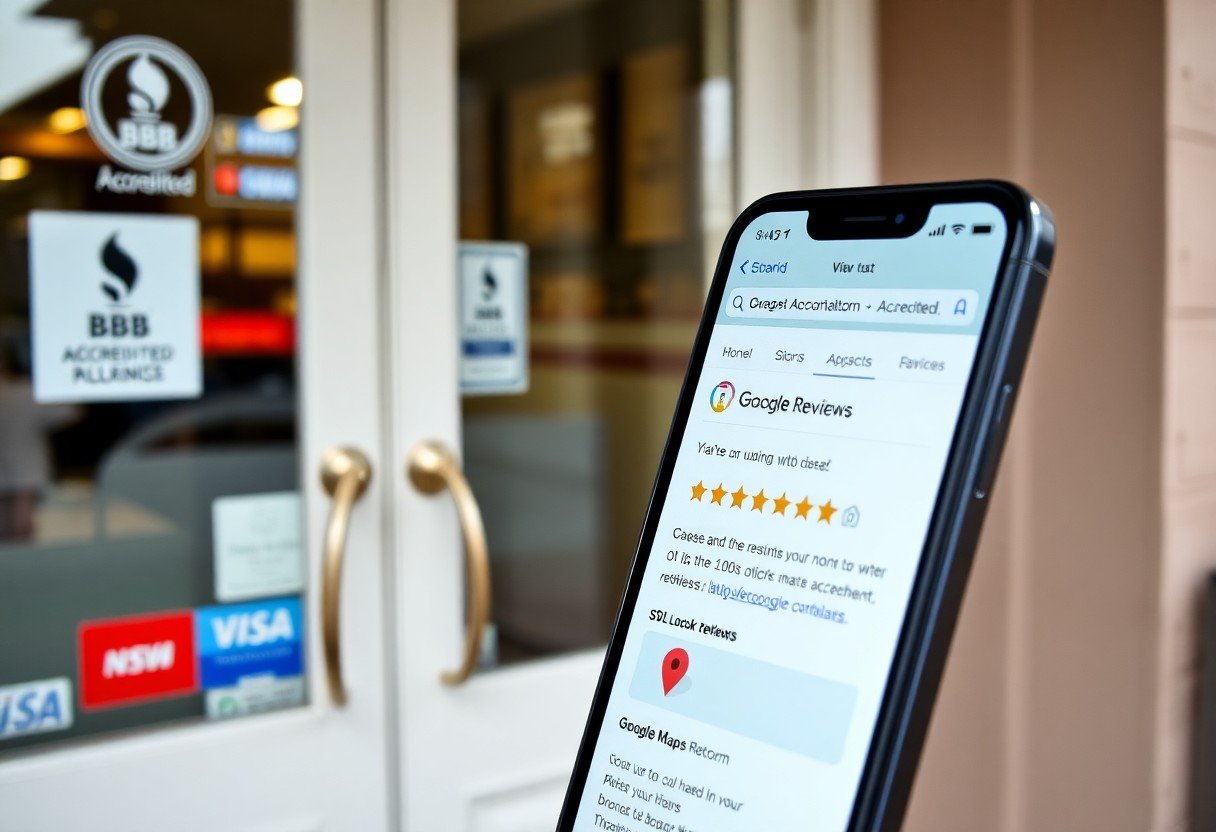
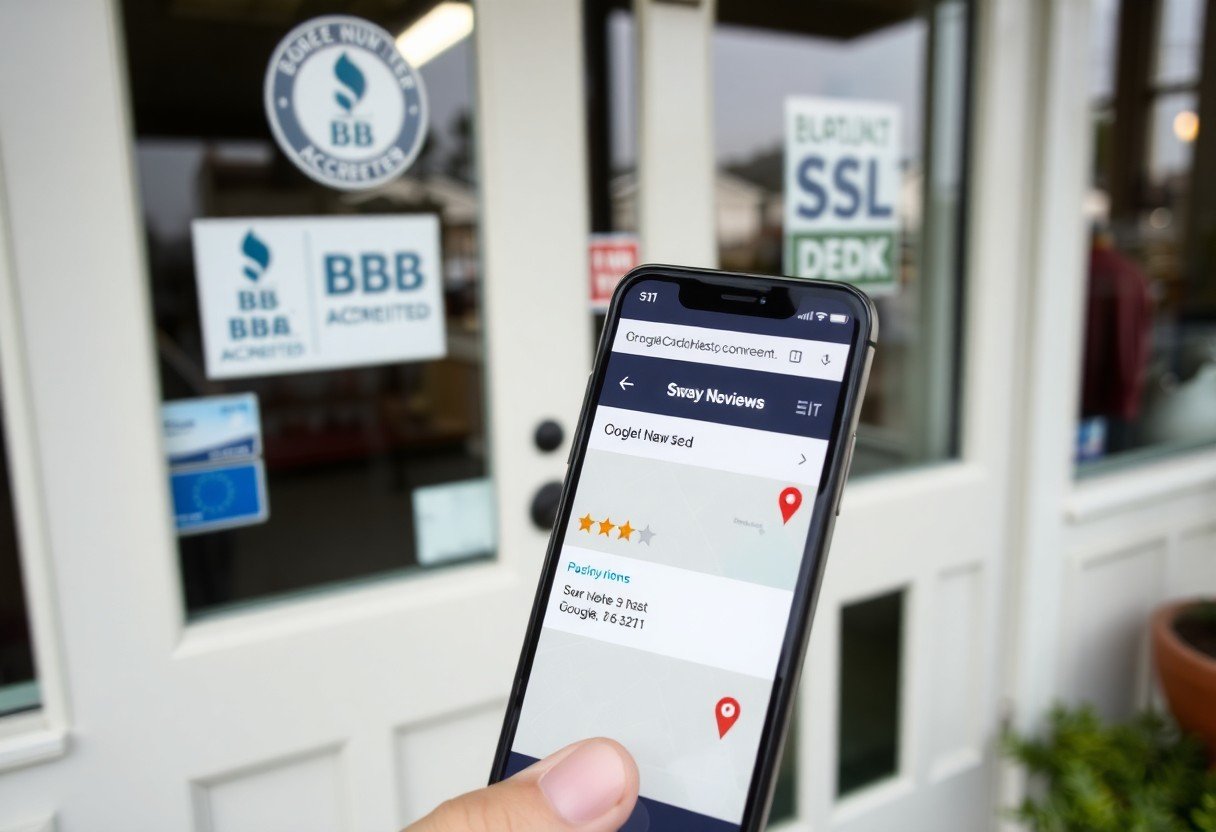
Online reviews and ratings shape how you’re perceived: high ratings and detailed reviews increase clicks and conversions, while inconsistent business listings harm local SEO. Claim profiles, respond to feedback, and display verified badges to boost trust.
Offline signals: storefront, staff, and local reputation
Your storefront, staff demeanor, and local endorsements influence whether you convert walk-ins: clean signage and friendly service signal safety, while visible neglect or rude interactions repel nearby customers.
Physical cues and staff behavior give instant signals about risk and quality: when you keep entrances tidy, post clear hours, show certifications, and train employees to greet and assist quickly, you lower hesitation and increase conversions. Conversely, broken signage, unhelpful staff, or mixed local feedback can drive customers away, so audit the experience regularly and collect local endorsements to reinforce credibility.
Building credibility and transparency
Strengthening credibility means making policies visible, contact options obvious, and guarantees explicit so local visitors trust you; when you do, your conversion rates increase and bounce rates fall.
Clear policies, contactability, and guarantees
Ensure you publish clear return, privacy, and shipping policies, show multiple contact methods, and offer bold guarantees; these visible cues reduce friction and boost local purchase intent.
Social proof: testimonials, case studies, and endorsements
Leveraging testimonials, case studies, and endorsements provides social validation; you should highlight star ratings, quantified outcomes, and third‑party seals while avoiding suspicious or fake reviews that can damage trust.
- Local bakery case study: added verified testimonials widget → +22% conversion rate, $12,000 monthly revenue lift, avg rating 4.8 from 320 reviews.
- Plumbing service case study: published before/after case studies with numbers → leads +40%, booked jobs +28%, average job value +15%.
- Dental clinic case study: displayed third‑party seals and ratings → CTR on local listing +33%, new patients +55% year‑over‑year.
Furthermore, you should surface specific metrics, dates, and customer names (with permission) to increase believability; pairing video testimonials and quantified outcomes markedly raises trust, while outdated or unverifiable endorsements pose a reputational risk.
- E‑commerce retailer case study: showcased quantified reviews → abandoned cart rate ↓18%, monthly orders +9%, overall revenue +$45,000 in three months.
- Home services aggregator case study: aggregated contractor ratings and endorsements → booking conversion +31%, average review count per contractor 145.
- Fitness studio case study: used member testimonials with ROI figures → trial signups +72%, paid memberships +34%, retention improved 12 points.
Measuring trust and its impact
When you measure trust, combine behavioral data and feedback to quantify effects on local conversions. Track how trust signals drive visits to action and flag data gaps that could hide lost revenue.
Quantitative metrics: conversion funnels, attribution, and retention
Use conversion funnels, attribution windows, and retention cohorts to spot where trust loss lowers conversion. Segment locally and monitor drop-off rates, correlated revenue, and false attribution that can mislead your optimization.
Qualitative insights: surveys, interviews, and mystery shopping
Gather surveys, interviews, and mystery shopping to help you understand local perceptions and trust friction. Focus on representative samples and note systemic complaints and strong loyalty signals that quantitative metrics may miss.
Delve deeper by designing short, targeted surveys with randomized sampling, and use open-ended interview prompts to capture emotional drivers of trust. Run mystery shopping to reveal operational issues and user-experience gaps. Triangulate findings with funnel data to avoid sample bias and prioritize actionable changes that increase local conversions and long-term loyalty.
Local optimization tactics to increase trust
Optimize your local presence by aligning listings, website, and review processes; complete profiles, visible trust badges, fast pages, and consistent contact info make nearby customers more likely to convert.
Google Business Profile, citations, and local SEO
Maintain a fully populated Google Business Profile, keep consistent citations across directories, add quality photos, and respond quickly to reviews to boost both visibility and perceived reliability.
Localized content, community engagement, and partnerships
Engage locals with city pages, event updates, and local testimonials; community ties and visible social proof increase trust and encourage in-person or online conversions.
Leverage localized blogs, case studies, and staff spotlights to show real impact; co-sponsor events, collect user-generated content, and vet partners-verified testimonials amplify trust while misaligned partners can damage reputation quickly.
Testing and iterating trust interventions
Experimenting with trust interventions lets you validate changes quickly; prioritize small, measurable tweaks to badges, reviews, and messaging, and track conversion lift and trust metrics to avoid harmful regressions.
A/B testing trust elements and measuring lift
Split-testing specific trust elements helps you quantify impact: run A/B tests on badges, testimonials, and CTAs, ensure adequate sample size and statistical significance, then measure lift per location to guide rollout decisions.
Continuous improvement and governance
Iterative governance ensures you scale what works while mitigating risk: define ownership, standardize tests, enforce compliance and data privacy, and set thresholds for automated rollbacks.
Operationally, maintain dashboards that show per-location trust KPIs, schedule regular audits, document changes, and train teams so you can spot negative trends fast and trigger rollbacks when necessary.
Summing up
Summing up you must prioritize trust signals-local reviews, clear policies, secure checkout, and fast responses-because when you earn local credibility, you increase conversions, repeat visits, and word-of-mouth referrals.