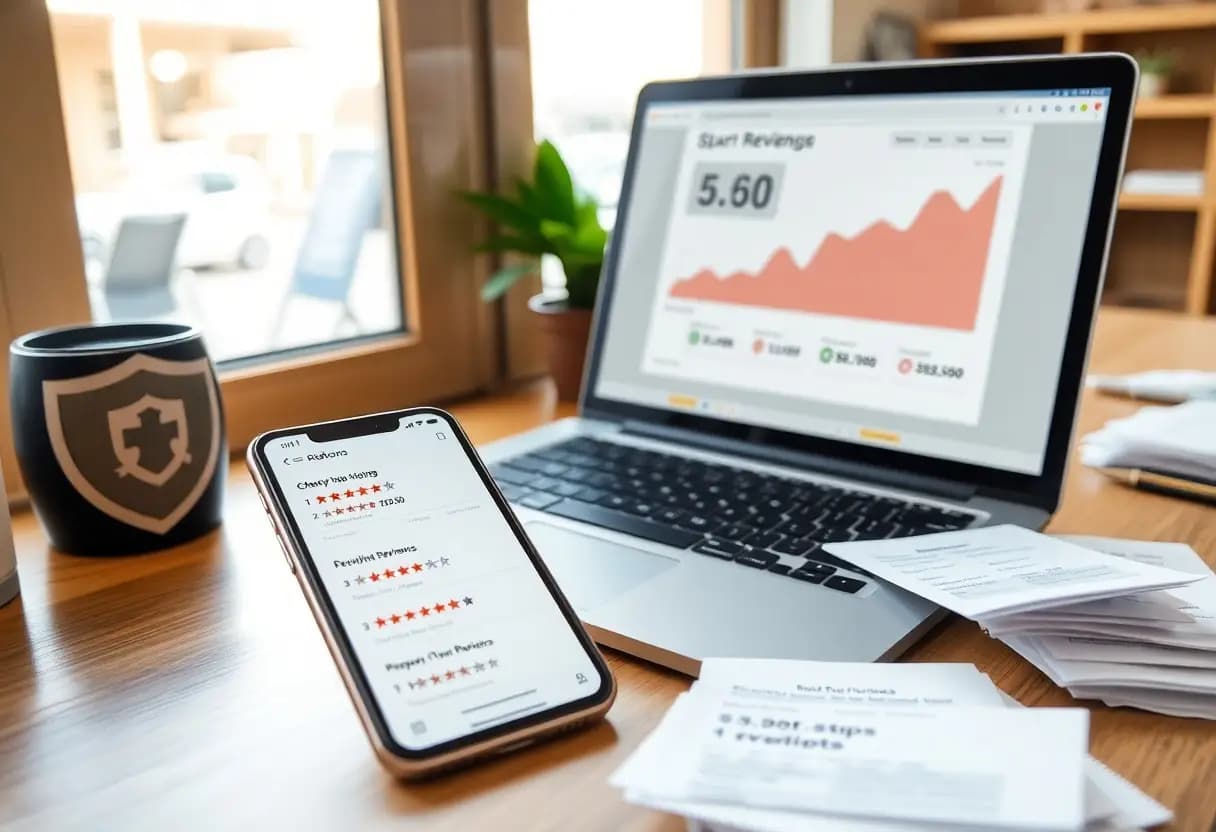
Revenue evaporates swiftly when negative reviews spread; you must monitor, respond, and repair reputation to protect sales, restore trust, and prevent customer loss.

How Reputation Impacts Revenue
Reputation determines how you attract business: poor reviews cause lost sales and lower pricing power, while a strong reputation wins trust, enabling higher margins and easier partnerships.
Customer acquisition and conversion effects
When prospects evaluate you, negative signals cut click-throughs and conversions; proactively managing reviews and SEO protects acquisition costs and delivers more qualified leads.
Retention, lifetime value and referral impact
Strong reputation keeps customers returning, lowering churn and increasing average spend; you secure higher lifetime value and more referrals that reduce acquisition costs.
Moreover, you must address complaints fast: a single viral complaint can erode trust and cut revenue, while timely responses and loyalty programs fortify relationships and lift customer lifetime value.
Common Reputation Threats
Businesses face varied threats that erode trust and revenue, from coordinated attacks to spontaneous complaints; proactive monitoring lets you spot issues early and limit damage by prioritizing customer trust and swift remediation.
Online reviews and social media crises
Negative reviews and viral posts can quickly shift perception; you must respond promptly, escalate patterns, and use transparent engagement to convert detractors and protect revenue.
Misinformation, complaints and legal risks
Misinformation, persistent complaints, and potential lawsuits amplify risk, so you should document incidents, correct falsehoods publicly, and involve legal teams to reduce liability.
When misinformation spreads, you should prioritize evidence-based rebuttals, preserve records, engage affected customers directly, and coordinate with counsel so you minimize regulatory exposure and safeguard brand value.
Monitoring and Detection
Monitor social channels, reviews and media mentions continuously so you can spot reputation threats before they escalate. With real-time alerts and automated scanning, you reduce revenue risk by addressing issues fast and preserving customer trust.
Tools, KPIs and real‑time alerts
Implement tools like sentiment analysis, review aggregators and media monitoring, tracking KPIs such as sentiment score, response time and volume of negative mentions. You set real-time alerts to trigger immediate investigation and minimize potential revenue impact.
Early warning signs and escalation paths
Recognize early warning signs-sudden sentiment drops, spikes in complaints or influential negative shares-and map escalation paths so you and your team act swiftly. Prioritize threats by reach and severity to prevent reputation damage from translating into lost sales.
When you detect anomalies, classify them by source, sentiment and potential business impact; set thresholds (for example, a >5% sentiment drop or 50 complaint mentions/hour) to trigger escalation. Assign clear roles: social handles immediate replies, legal vets claims, and leadership approves public messaging. Keep an incident log, use response templates for transparent communication, and track recovery metrics to stop repeat losses.
Response and Remediation
Acting fast to contain reputational damage limits revenue erosion and restores trust. You should coordinate responses, prioritize affected customers, and deploy clear public statements and remediation plans to prevent escalation and lost sales.
Crisis communication and public responses
When crises hit, you must issue timely, transparent statements, acknowledge harm, and outline next steps to preserve confidence. Coordinate spokespeople and channels to avoid mixed messages and reduce rumor-driven revenue drains.
Operational fixes and customer recovery
Swiftly fix systems and processes to stop recurring issues; you should offer prompt compensation and clear recovery paths so customers return and revenue stabilizes.
Focus on diagnosing the root cause, updating SOPs, training staff, and implementing monitoring to prevent repeats; you should track recovery KPIs and proactively reach affected customers with refunds or offers.
Proactive Reputation Building
Proactively shaping perceptions prevents issues before they hit revenue by aligning messaging, customer experience, and crisis readiness. When you invest in ongoing reputation work, you create a buffer against negative events and build a portfolio of positive signals that protect sales and valuation.
Brand differentiation and consistent value delivery
Differentiate your business by consistently delivering the value you promise; consistency builds trust and makes competitors’ missteps less damaging. When you ensure product quality, service standards, and messaging align, you strengthen customer loyalty and reduce the risk of revenue decline from reputation dips.
Employee advocacy and stakeholder engagement
Empower employees and stakeholders to act as trained advocates; their authentic voices amplify your strengths and counter misinformation. By equipping your team with guidance and incentives, you turn internal networks into trusted channels that preserve reputation and protect revenue.
Additionally, you should formalize advocacy with clear guidelines, role-based training, content toolkits, and measurable KPIs so employees share aligned messages without exposing the brand. If you ignore monitoring, misconduct can amplify damage, so combine incentives with oversight and a rapid response plan to correct errors before revenue is affected.
Measuring ROI and Business Outcomes
Measure how you connect reputation activities to ROI by tracking revenue changes, customer lifetime value, and conversion rate shifts after interventions; tie sentiment shifts to sales to expose revenue impact from reputation gains or losses.
Attribution methods and key metrics
Use multi-touch, time-decay, and holdout tests to assign value; monitor conversion rate, average order value, CLV and review sentiment to quantify how reputation changes drive measurable revenue differences for you.
Benchmarks and case examples
Track sector benchmarks like review score lifts and conversion gain percentages; compare your trends to peers to spot dangerous declines or opportunity gains that predict revenue at risk or upside for you.
Compare anonymized case examples from your industry to set realistic targets: a sustained increase in average rating and faster complaint resolution often produces a measurable conversion uplift and lower acquisition costs. Contrast that with periods of negative review spikes that correlate with lost deals or churn. Use matched cohorts and before/after windows so you can attribute revenue differences to reputation actions you implement.
To wrap up
Drawing together, reputation management helps you detect and resolve negative feedback, maintain customer trust, protect brand value, and reduce churn-so you prevent revenue loss by preserving sales, referrals, and pricing power through proactive monitoring, timely responses, and consistent quality.