
Profiles determine how Google classifies your business; you must choose the best categories to gain search visibility, because misclassification can lose customers, while the right categories boost relevant traffic and conversions.
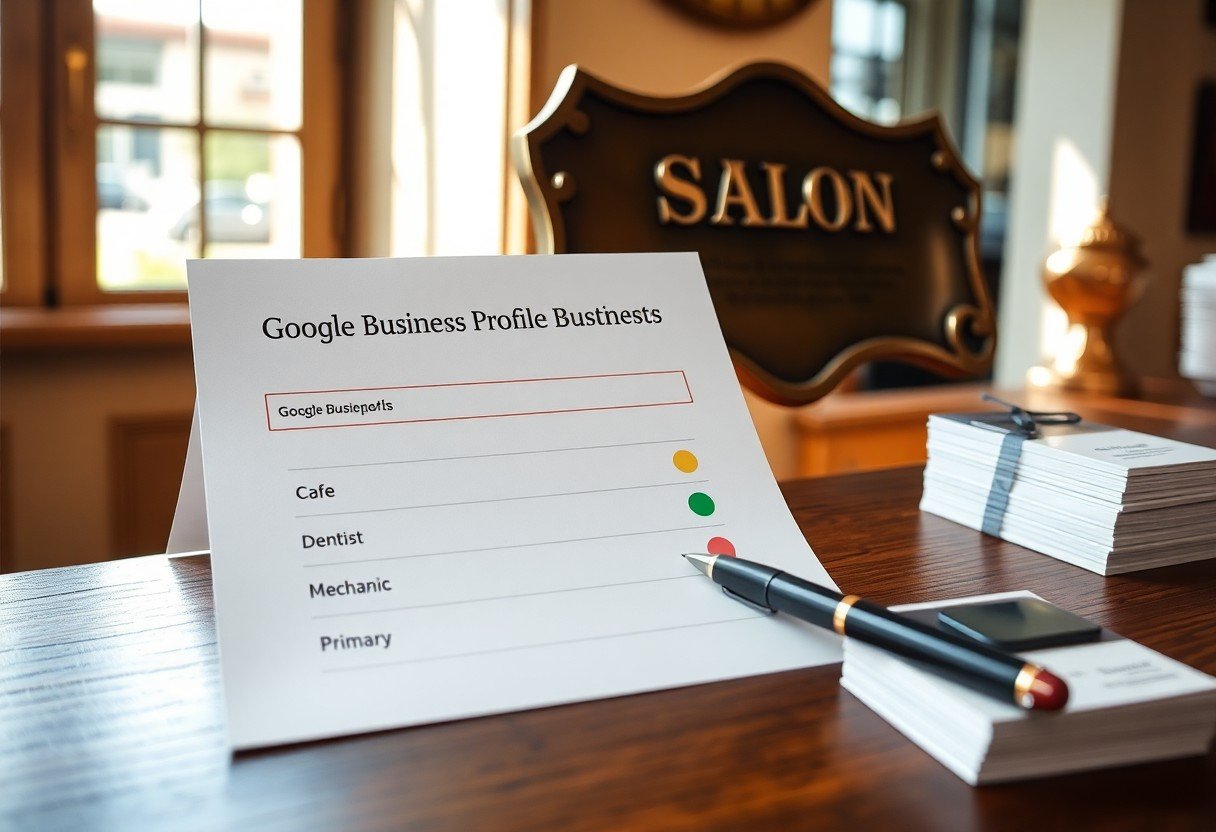
Why Categories Matter for Google Business Profiles
When you pick precise categories for your Google Business Profile, you shape how Google interprets your services and which queries trigger your listing. Choosing a focused primary category amplifies relevant impressions and helps you appear for targeted searches, improving qualified traffic and local exposure.
Impact on local search visibility and ranking
Because Google uses categories as a ranking signal, accurate selections directly affect local visibility; the right category can move you into the local pack, while broad or wrong choices dilute relevance. Set a specific primary category and supportive secondary categories to maximize placement and clicks.
Matching searcher intent and relevance signals
By aligning categories with what searchers type, you send clear relevance signals to Google and increase the chance your profile surfaces for intent‑aligned queries. Precision boosts conversions, while mislabeling attracts irrelevant traffic and wastes marketing effort.
Additionally, you should audit categories against competitors and customer search terms: pick the most specific available as your primary category, add complementary secondary categories, and list services in the profile to reinforce relevance. Track Google Insights to see which queries drive views, correct mismatches promptly, and avoid category stuffing because an incorrect category can reduce ranking and lower conversion rates.
How Google Uses Categories
Google interprets categories to match your profile to queries, location and intent, so you need accurate choices; primary category largely defines ranking signals, while secondary categories add context and niche reach, affecting how frequently and where your profile appears in results.
Primary vs. secondary categories and their weight
Primary category directs Google’s algorithms and influences Maps ranking, while secondary categories let you signal specialties and capture niche queries; pick one best-fit primary and supplement with targeted secondaries to expand discovery without diluting relevance.
Category hierarchies, attributes and knowledge graph signals
Hierarchies, attributes and Knowledge Graph links show Google how your services relate to categories and other entities; you should complete attributes and choose precise categories because misclassification can create harmful Knowledge Graph associations that reduce qualified traffic.
Attributes, reviews, website markup and citations feed entity signals to Google’s graph, so you must sync category choices with schema and profile attributes; consistent structured data strengthens correct associations and ranking for your most valuable searches.
Choosing the Right Categories
When opting for categories, prioritize a precise primary category and supporting secondary categories that match your services; Google uses these to match searches, so improper choices can reduce visibility.
Research methods: keyword, competitor and industry analysis
Use keyword, competitor, and industry analysis to identify the terms buyers use and the categories competitors rank in; prioritize categories aligned with high-intent keywords and avoid overly broad options that dilute relevance.
Testing choices and documenting changes
Then test category variations, monitor rankings and customer queries, and log each change; systematic testing reveals which categories improve discovery while helping you avoid visibility drops.
Additionally, run controlled tests for at least 2-4 weeks and track impressions, search queries, clicks, calls, and conversions in a simple spreadsheet with date, category set, and outcome columns. Always document exact edits, expected impacts, and results so you can roll back if performance falls. Watch for policy flags-frequent edits can trigger warnings or profile suspension-and prioritize changes that increase qualified leads over vanity metrics.
Common Category Mistakes and How to Fix Them
Avoid sloppy category choices: when you pick the wrong or multiple redundant categories you cause reduced visibility, mislead customers and risk Google actions; streamline your primary category and audit extras to fix issues.
Overbroad, incorrect or duplicated categories
When you use overbroad, incorrect or duplicated categories you dilute relevance; select the most specific primary category, delete duplicates and align additional categories to your actual services to improve ranking.
Misuse of services, products and attributes
Misusing services, products and attributes-by listing items you don’t offer or stuffing keywords-confuses customers and risks suspension; apply attributes honestly and only add services you actually deliver.
Additionally, you should map services to matching categories, use the product picker for distinct items, keep attributes current and run periodic audits; verify each entry to prevent mismatches and search penalties.
Measuring and Monitoring Category Performance
Track category performance regularly so you can gauge visibility and local relevance; use changes in ranking, queries, and conversion signals to decide category adjustments. Prioritize rapid fixes for mismatches and experiment with secondary categories across locations.
Key metrics: impressions, queries, clicks and conversions
Monitor impressions, search queries, clicks, and conversions so you can see how categories drive discovery and action; weight conversions and conversion rate highest when choosing primary categories, while impressions reveal reach.
Tools and workflows for ongoing audits
Audit toolsets should feed you scheduled reports, alerts for category drift, and easy bulk-edit workflows; tie audits to listing owners and regional managers for fast resolution.
Automate recurring checks by combining Google Business Profile Insights, local rank trackers, and an API-driven bulk-edit flow so you can scale fixes. Set threshold-based alerts for sudden category changes, assign SLAs and owners, keep an immutable audit log, and use scripts or RPA for repetitive corrections to prevent incorrect categories from eroding visibility.
Advanced Optimization Strategies
Optimize your category choices to send clear signals to Google; pick an exact primary category, supplement with precise secondary categories, and avoid mismatches that invite policy violations. Doing so increases visibility and relevance for local search.
- Audit current categories against actual services and remove inaccurate entries.
- Test alternate secondary categories to see which improve ranking and clicks.
- Sync website schema, service pages, and product listings with chosen categories.
- Monitor Insights and reviews to validate category-driven traffic and conversions.
Category breakdown
| Signal | Action |
|---|---|
| Primary category | Choose the most specific match to your main offering. |
| Secondary categories | Supplement with related services, but avoid unrelated choices. |
| Photos & posts | Use media that directly reflects categorized services to reinforce relevance. |
Aligning categories with services, products, photos and posts
Align your categories to match the services, products, photos, and posts you publish; this consistency strengthens relevance signals, boosts discovery, and reduces the risk of policy violations. Use images and posts that explicitly showcase the categorized offerings.
International, multi-location and niche business considerations
Scale your category strategy across locations and languages: set the correct primary per listing, choose local variants, and use niche categories where needed to improve local relevance. Avoid inconsistent selections that lead to misclassification.
Additionally, use a category matrix to map services to categories by country and location, employ the Google Business Profile API or bulk uploads for consistent updates, and localize category labels and content. You should test queries in local markets, monitor for ranking and suspension risk, and prioritize niche categories when they directly match specialized offerings to capture targeted local intent.
Summing up
The right categories help Google understand your business, improve search visibility, attract relevant customers, and ensure accurate features and insights, so you can optimize listings, appear in the right searches, and increase qualified leads.