
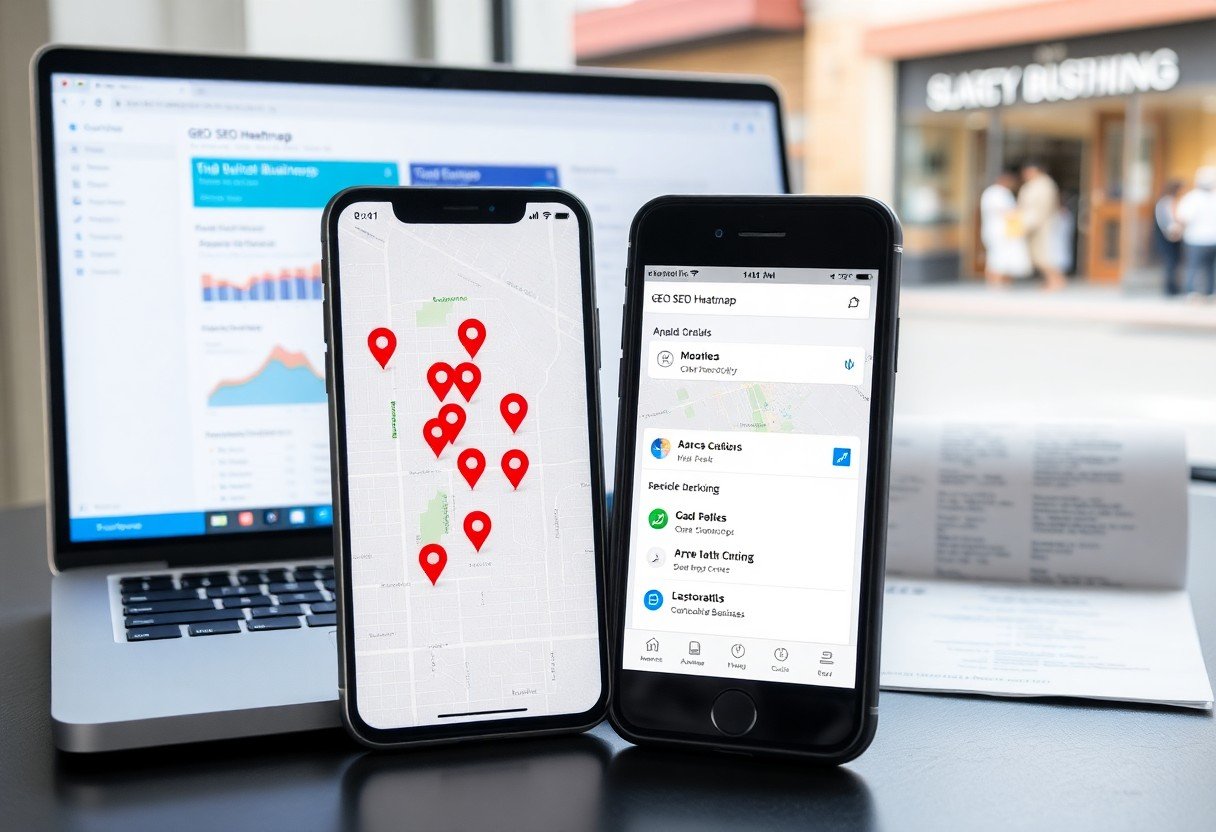
SEO pinpoints local searches so you reach customers nearby; mastering GEO SEO gives you measurable growth while ignoring it risks losing market share to competitors; adopt precise location signals and real-time optimization to dominate local visibility.
Understanding GEO SEO
Definition and scope
You should view GEO SEO as the practice of optimizing online presence for specific locations, aligning keywords, content, and signals so local audiences find you faster.
Key components (geotargeting, local citations, GBP)
Focus on three pillars: geotargeting to match search intent, consistent local citations for authority, and a fully optimized Google Business Profile to win visibility.
Geotargeting helps you pinpoint neighborhoods, languages, and service radii so your pages and ads serve intent-driven searches; inconsistent citations or wrong addresses can cause ranking penalties, while a verified Google Business Profile with accurate hours, categories, and reviews delivers the largest local visibility and trust gains.
Why GEO SEO Is the Future of Local Marketing
Ultimately, GEO SEO lets you align content with local intent so you appear for nearby searches, driving higher foot traffic and stronger brand recall while competitors relying on generic SEO fall behind.
Mobile and proximity-driven consumer behavior
When you optimize for proximity, mobile users find you at the exact moment they intend to act; local signals turn searches into immediate conversions, so you capture impulse visits and calls before competitors.
Higher ROI and competitive differentiation
By targeting neighborhoods and intent, you lower wasted spend and enjoy higher ROI, while tailored local content creates a distinct competitive edge against national players.
Furthermore, you can quantify gains through lower cost-per-acquisition and faster conversion cycles; localized ad spend, optimized Google Business Profiles, and location-specific landing pages boost relevance and trust, producing measurable uplift in sales. Failing to optimize local signals exposes you to permanent loss of market share, so integrate GEO SEO into budgeting and analytics now.
Core Technical Elements
Speed, mobile rendering, and geolocation signals must be tuned so you deliver consistent local experiences; prioritize fast mobile load and correct schema to avoid lost visibility.
On-page geotagging & structured data
Implementing precise geotags and schema markup tells search engines where your pages matter most. You should use schema.org LocalBusiness, embed lat/long where applicable, and keep NAP values consistent to boost local relevance and reduce indexing errors.
Local business profiles, citations, and reviews
Optimize your business profiles, citations, and reviews so you align with on-page data; ensure consistent NAP, accurate categories, and prompt responses to reviews to improve local rankings and user trust.
Maintain active citations and solicit reviews from customers, while you monitor for fake or conflicting entries that can trigger penalties; disavow or fix harmful listings quickly to protect visibility.
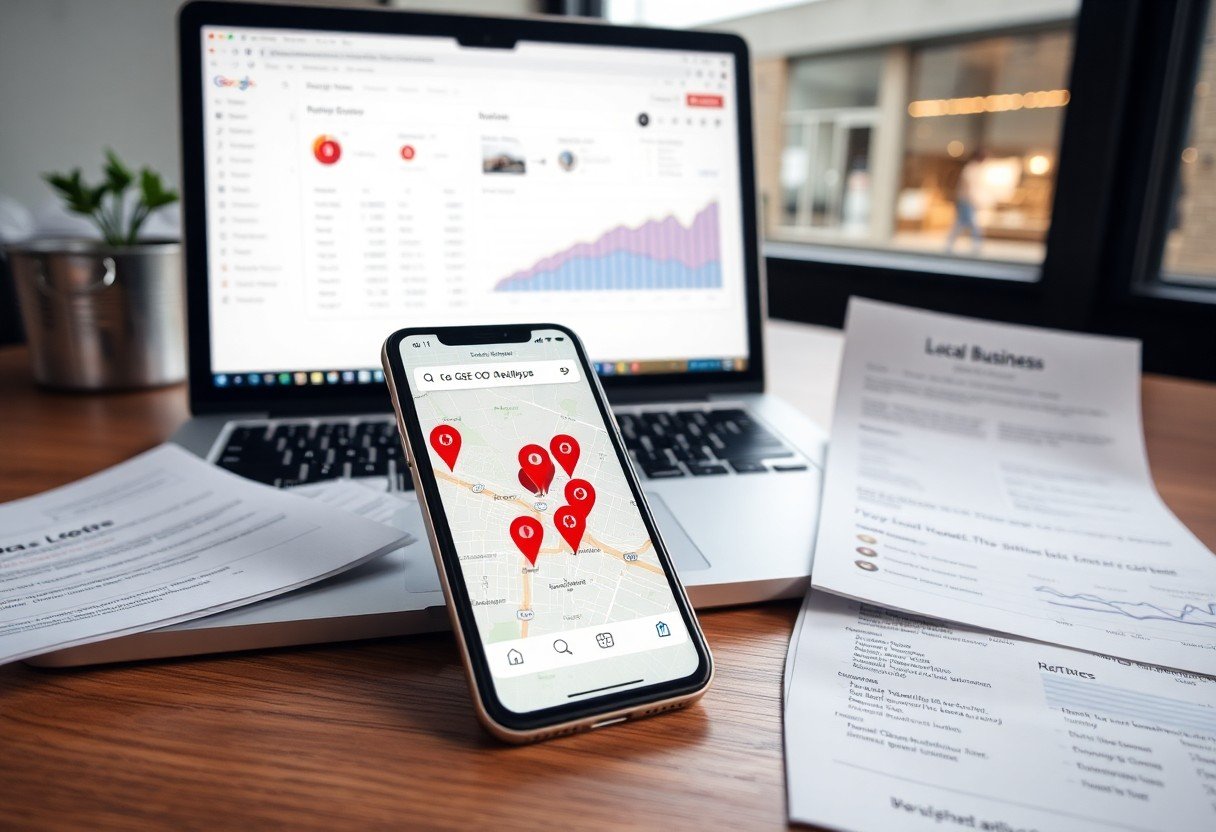
Strategy and Implementation
Local keyword research & content localization
When you map local search intent, prioritize long-tail phrases and adapt content to dialects, landmarks, and micro-audiences; use structured metadata and high-intent terms to boost visibility in local packs.
Multi-location scaling and automation
Scale operations with templated pages, centralized data feeds, and automation for citations and review workflows to keep accuracy across locations while preserving local voice.
Implement governance: create canonical templates, unique local copy per page, automated bulk updates via APIs, scheduled audits, geotagged images, and review response workflows. You must watch for duplicate content and inconsistent NAP data, which can damage rankings; use validation rules and sinks to prevent drift. Proper automation yields massive time savings while keeping each location’s local relevance intact.
Measurement and Optimization
Measure performance continuously using geo-segmented data to refine local campaigns; you must prioritize signals tied to real outcomes and use real-time updates to adjust targeting.
Local KPIs (foot traffic, calls, conversions)
Track foot traffic, calls, and conversions as your primary local KPIs; use store visits, call records, and form completions to link online activity to offline results, and focus on the metrics that drive revenue.
Tools and analytics (GSC, GA4, local rank trackers)
Monitor GSC, GA4, and local rank trackers to capture search impressions, behavior, and ranking shifts; combine them to build a single view of location performance and catch drops before they erode traffic.
Leverage Google Search Console to isolate geo-specific queries and indexing errors, and use GA4 to instrument events, UTM campaign flows, and store visits or conversion events tied to locations. Pair those with local rank trackers to track SERP features by ZIP and implement call-tracking numbers to validate leads. You should also audit attribution windows and watch for device opt-outs or sampling-these can cause misattribution, so reconcile analytics with POS or CRM data regularly.
Common Challenges and Best Practices
Navigating GEO SEO requires you to fix data accuracy, monitor local signals, and optimize for user intent; prioritize structured data, geo-tagged content, and consistent citations while avoiding tactics that trigger penalties.
Inconsistent NAP & duplicate listings
Resolve inconsistencies by auditing citations frequently; you must sync NAP across platforms, remove duplicate listings, and set canonical entries so local visibility and customer trust improve.
Review management, privacy, and compliance
Manage reviews and privacy by tracking sentiment, responding promptly, and enforcing consent policies; noncompliance can cause fines or suspended listings, while active handling builds trust and conversions.
Additionally you should implement a documented review policy: obtain explicit consent before publishing PII, anonymize sensitive details, and keep an auditable log of moderation actions. Use automation for triage but retain human oversight to detect fake or defamatory reviews. Avoid incentivized feedback to prevent platform penalties; consistent, transparent handling yields higher trust and improved rankings.
Summing up
Summing up, you should prioritize GEO SEO because it aligns search with physical intent, boosts local visibility, drives qualified foot traffic and conversions, and scales cost-effectively as location-driven queries grow, making it the strategic core of local marketing.