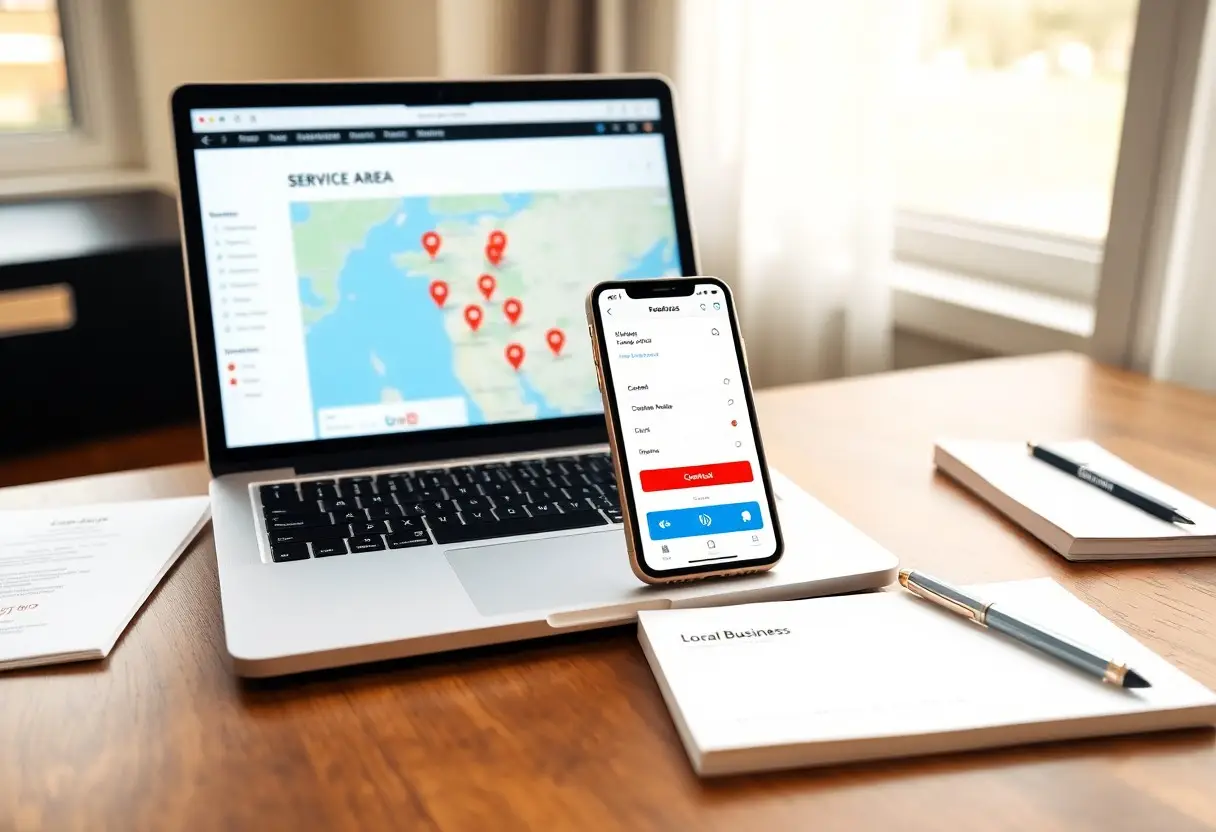
With targeted service area pages, you earn higher local visibility and rank for neighborhood searches, capture more qualified leads, and lower marketing costs while avoiding the danger of losing local traffic to competitors.
What are Service Area Pages?
Service area pages define the specific locations your business serves, so you can target local search intent, rank for nearby queries, and capture more qualified leads from the communities you serve.
Definition and business purpose
They let you present tailored service descriptions, pricing cues, and trust signals so your site answers local buyers’ questions and encourages higher conversion rates for each area you target.
Core components and page anatomy
Page components usually include localized headlines, service-specific content, clear CTAs, your NAP, schema markup, and customer reviews so you can build relevance and trust; prioritize accurate NAP and schema to avoid ranking penalties.
Additionally, you should make each page unique with localized keywords, original descriptions, high-quality images with alt text, embedded maps, and clear click-to-call CTAs; implement LocalBusiness and GeoCoordinates schema and internal links. Avoid duplicate content and maintain consistent NAP, since thin or conflicting pages can sharply reduce rankings and waste your marketing spend.
SEO advantages for local visibility
Search visibility increases when you build service area pages that match local queries; you get better map-pack placement and organic rankings by combining targeted content with local signals.
Targeted keyword relevance and intent
When you target neighborhood-specific keywords and intent-driven phrases, searchers find pages that match their needs, boosting click-throughs and conversion rates.
Local signals: NAP, schema, and inbound links
Consistent NAP across listings and precise schema markup signal your locations to search engines, and local inbound links boost authority for specific service areas.
Inconsistent citations and address mismatches confuse algorithms and users; you should audit directories, implement detailed schema, and earn authoritative local links to prevent ranking drops and build trust.
Improving user experience and trust
Enhancing your site’s navigation and trust signals with targeted service area pages reduces friction and signals relevance to users and search engines, so you get higher engagement, longer sessions, and higher conversion rates.
Localized content, expectations, and intent matching
Tailoring content to local terms, common questions, and intent ensures you match what users search for, set accurate expectations, and increase the chance of a contact or booking via local SEO signals.
Reviews, case studies, and social proof
Leveraging visible reviews, testimonials, and nearby project examples builds immediate trust so users feel comfortable contacting you, and it mitigates the impact of any negative feedback.
- HVAC company (Midwest): Adding 12 service area pages grew organic traffic by 58% in 6 months and increased leads by 72%, raising local conversion from 2.1% to 4.9%.
- Plumbing franchise (Metro): Optimized localized content for 8 towns, yielding a 40% rise in phone calls and a 33% increase in booked jobs within 4 months.
- Roofing contractor (Southeast): Showcased project galleries and reviews on area pages; time on page increased 85% and quote requests climbed 48% quarter-over-quarter.
Additionally, you should showcase recent reviews and case studies on each area page to address local objections, let prospects verify results, and create a repeatable sales signal that boosts trust and conversions.
- Landscaping service (Suburban): Posting 50+ neighborhood case studies raised form submissions by 67% and average job value by 22% over nine months.
- Dental clinic (Urban): Neighborhood-specific patient reviews increased new patient bookings by 31% and local organic clicks by 45% in six months.
- Electrician service (Regional): Implemented review schema on area pages; rich snippets produced a 24% higher CTR and 15% more calls from search results.
Converting visitors into leads
When visitors reach your service area pages, funnel them toward one high-value action using clear, low-friction CTAs that match their local intent and capture contact details fast.
Effective CTAs, forms, and conversion pathways
Optimize CTAs and forms to minimize fields, surface local trust signals, and place them at intent hotspots so you increase completed submissions and reduce drop-off.
Micro-conversions and follow-up flows
Track micro-conversions like clicks, phone taps, and chat starts to collect intent signals and prioritize the next contact step, turning small actions into pipeline movement.
Nurture those signals by mapping events to automated, segmented follow-up: send an immediate SMS after a phone tap, a targeted email after a download, and flag frequent interactions for warm callbacks so your team delivers timely, personalized contact that converts higher-value leads.
Implementation and scaling strategy
Scale your service area pages with modular templates, phased rollouts, and KPIs so you expand efficiently while avoiding duplicate-content risks and quality drift.
Content templates, architecture, and URL strategy
Design templates that prioritize local relevance and scalable fields, map a clear hierarchical URL structure, and use canonicalization to prevent thin-page proliferation as you grow.
Technical considerations and crawlability
Optimize your robots.txt, XML sitemaps, internal link flow, and site speed so crawlers discover pages efficiently while protecting your indexing budget.
Monitor server logs and Search Console to track how often bots access your service area pages; adjust crawl priorities via sitemap frequency, internal linking, and noindex rules to prevent crawler waste on low-value duplicates. Use canonical tags and parameter handling to collapse duplicate URLs, implement structured data for local signals, and improve mobile page speed to maximize indexing and conversions.
Measurement and continuous optimization
Measure results continuously so you can refine Service Area Pages based on outcomes, not guesswork. Track traffic, lead volume, and user engagement to prioritize changes that increase revenue.
KPIs: leads, conversion rate, and attribution
Track KPIs like lead volume, conversion rate, and attribution so you can assess which pages drive growth and where to invest time and budget for the biggest returns.
A/B testing, analytics, and iterative improvements
Test different headlines, CTAs, and local proofs via A/B testing; combine with analytics so you find what truly lifts conversion rate. Run winners broadly to compound gains.
Analyze test results by segment, device, and traffic source so you see where changes move the needle; ensure proper sample size and run tests across business cycles to avoid false positives. Use funnel metrics and attribution to connect experiments to revenue, document outcomes, and prioritize high-impact iterations that steadily improve lead quality and volume.

Final Words
Following this, you use service area pages to target local keywords, present location-specific services, and provide trust signals that boost search visibility and convert nearby prospects into leads.