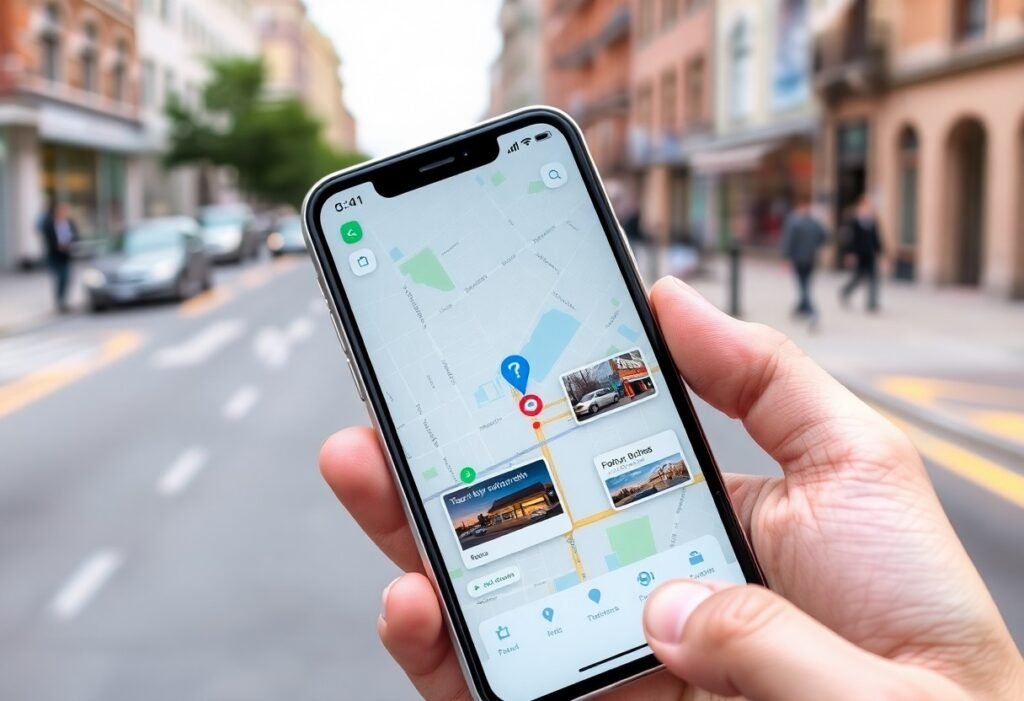

Many times you prioritize proximity, but you should weigh location relevance because it affects outcomes, increases risk when ignored, and delivers greater returns for your decisions.
Conceptual distinction: proximity versus relevance
Understanding that proximity and relevance differ matters: you can’t use distance alone to assess value. While proximity measures physical separation, relevance ties to needs, context, and accessibility. Treat distance-only metrics as potentially misleading when you aim for useful, actionable location decisions.
How distance is defined and why it’s limited
Distance often refers to straight-line or network metrics, but you still face limits: such measures ignore travel time, mobility constraints, and your actual intent. Relying on raw distance can produce false positives when accessibility, hours, or mode of transport change outcomes.
What location relevance includes (context, intent, accessibility)
Context shapes whether a nearby place matters; your intent and actual accessibility determine usefulness. Time, amenities, safety, and cultural fit matter too. Without these layers, you risk misclassification and poorer decisions despite short distances.
Moreover, you should weigh signals like search intent, transit time, and operational hours; a 500m walk is irrelevant if you lack mobility or the venue is closed. Incorporating demographics and temporal patterns yields higher conversion and avoids misguided recommendations that pure distance produces.
User intent and contextual signals
Understanding how you phrase queries and interact with results reveals intent, letting systems weigh relevance over raw distance by using device, query context, and past actions to surface the most useful nearby options.
Temporal context, purpose, and behavioral cues
Timing shapes what you want: a time-sensitive query, planned itinerary, or quick errand shifts which locations rank highest, while recent clicks and session behavior clarify likely purpose.
Personalization and the role of user profiles
Personalization leverages your history and stated preferences to deliver personalized results, but it also raises privacy trade-offs you should control via settings and consent.
Moreover, you gain faster, more relevant matches when systems combine recency, saved favorites, and behavioral segments; however, tailored results can introduce bias or enable misuse unless you manage data sharing and review profile assumptions.
Data sources and relevance metrics
Data from device sensors, maps, reviews and historical visits helps you evaluate relevance beyond miles; combine behavioral, explicit, and contextual signals so you surface options that match intent rather than just proximity.
Implicit signals: engagement, dwell time, routing patterns
Engagement metrics like click-throughs, dwell time, and routing patterns reveal how users behave; you should treat prolonged dwell and repeat routes as strong intent while watching for anomalous loops that can mislead relevance models.
Explicit signals: ratings, searches, check‑ins
Ratings, searches, and check-ins give you direct feedback on quality and popularity; you should weight verified reviews and frequent queries higher, yet guard against fake ratings and coordinated check-ins that distort relevance.
Additionally, you can refine relevance by merging star scores with query context and timestamps; high-rated places searched for late-night delivery differ from daytime dining, so you must detect review manipulation and temporal intent to keep results reliable.
Real-world failures of distance-based approaches
Often distance-only rankings mislead you: the nearest option can be closed, congested, or out of stock, causing lost sales and persistent frustration.
Examples from retail, emergency services, and mobility
Consider retail where you arrive to empty shelves, emergency responses slowed by traffic producing a delayed response, and mobility platforms creating inefficient matches with wasted trips.
When closer is worse: obstacles, capacity, and opening hours
Sometimes proximity backfires when physical barriers, maxed capacity, or mismatched hours make a farther option faster and safer, increasing your wait and exposure.
You must model barriers (rivers, one-way systems), operational limits (full queues, closed counters), and temporal availability; ignoring them yields significant delays, operational failures, and inequitable outcomes.

Designing systems that prioritize relevance
Align system architecture so you weight contextual signals over raw proximity; implement flexible indexing, real-time context ingestion, and privacy-aware enrichment so results stay relevant to intent rather than distance alone.
Ranking models, feature engineering, and hybrid signals
Combine learned ranking with heuristic features and signal fusion so you capture intent, popularity, and context; tune feature weights and guard against bias by validating on diverse cohorts, ensuring relevance trumps simple proximity.
Evaluation methods and A/B testing for relevance
Measure relevance using offline metrics and live A/B tests that reflect your users’ tasks; you should prioritize session-level engagement and task success over click-through rates, and track negative outcomes to avoid regressions.
Ensure your evaluation pairs offline proxies (NDCG, precision@k) with live outcomes (session success, retention, task completion); you must run stratified cohorts, sequential rollouts, and power analyses to detect effects. Instrument treatment buckets, monitor offline-online gaps and statistical power, and halt experiments that show signals of user harm or equity degradation while you iterate.
Ethical, privacy, and business considerations
You must balance ethical, privacy, and commercial concerns when prioritizing relevance: protect user trust, comply with law, and align business incentives to avoid harms or user churn.
Bias, fairness, and transparency in relevance models
Algorithms trained on biased signals will mislead relevance; you should demand transparency, regular audits, and clear explanations so you and stakeholders can spot unfair patterns.
Data privacy, consent, and commercial tradeoffs
Privacy constraints force you to minimize data and secure consent: design relevance features that use minimal identifiers, anonymize where possible, and weigh commercial gains against user rights.
Furthermore, you should enforce retention limits, purpose-bound logging, and privacy impact assessments; give users control over relevance signals and document revenue tradeoffs so legal, ethical, and product risks are visible and manageable.
Final Words
Taking this into account you should prioritize location relevance over raw distance because it aligns resources, accessibility, and context with your goals, improving outcomes, decision speed, and stakeholder satisfaction while reducing wasted effort and unforeseen constraints.