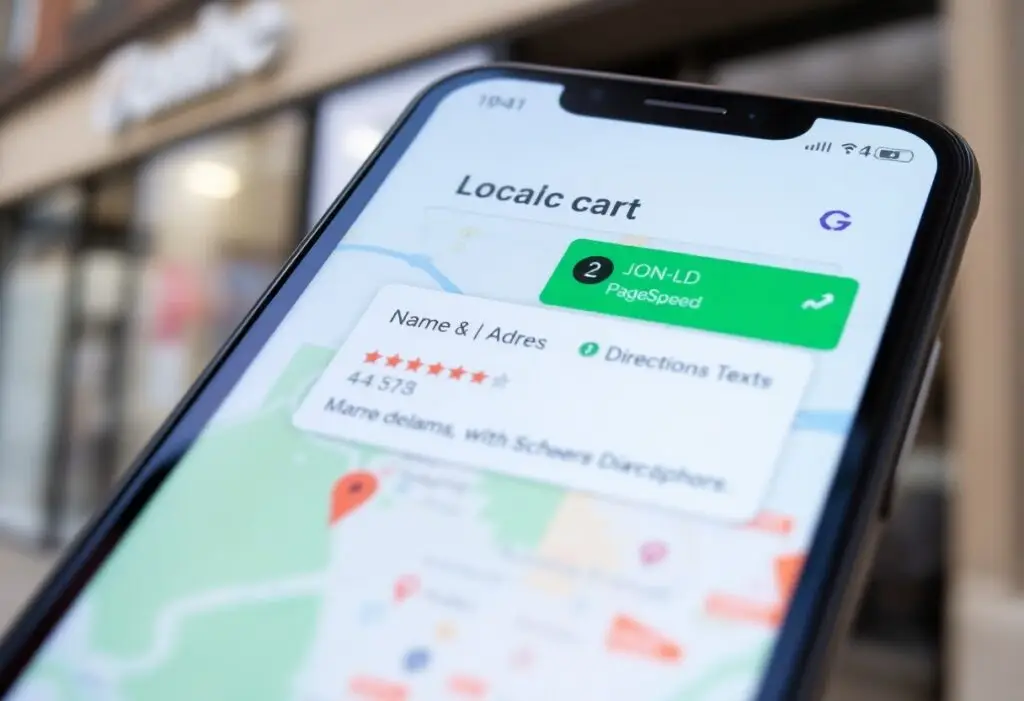

Local expansion stalls when you neglect consistent NAP, localized content, and technical scalability, causing lost rankings and duplicate listings; you must implement structured site architecture and geo-targeted content to protect visibility and grow effectively.
Misunderstanding Local vs. Expansion SEO
Many expansion attempts fail because you treat new areas like clones; you must tailor content, links, and local signals per market to avoid wasted budget and lost rankings.
Treating new markets like the original market
Assuming you copy your original SEO into new markets means you ignore local keywords, competitors, and culture, causing poor relevance and wasted spend.
Ignoring local search intent and signals
When you overlook local search intent, your pages miss map placements and hyperlocal queries; you lose visibility by ignoring geo-specific intent and behavioral signals.
Specifically, you need to research local query modifiers, tailor landing pages to neighborhood needs, optimize Google Business Profile for service areas, and build citations reflecting actual presence; missing these causes severe ranking drops.
Weak Technical Foundations
Often your expansion stalls when technical debt hides location pages, causing duplicate content, crawl barriers, and broken schema that confuse search engines and users, limiting visibility across new markets.
Poor site architecture for multi-location
When you copy a single store page for every location, search engines see thin, duplicate pages and local relevance drops, making it impossible to rank for individual service areas.
Mobile, speed, and indexability problems
Mobile failures like slow load times and blocked resources mean search bots won’t index pages, so your new locations remain invisible despite on-page SEO and local citations.
Additionally you must audit render paths, optimize images, implement responsive templates, and fix JavaScript that blocks crawling; otherwise Core Web Vitals and mobile-indexing penalties will tank rankings for every new storefront despite good local signals.
Inconsistent Location Data
When your address, phone, or service areas differ across platforms, search engines struggle to trust your presence and customers face confusion; this erodes local performance and leads to lost visibility.
NAP and citation inconsistencies across directories
If your NAP and citations vary in spelling, abbreviations, or suite numbers, you create ranking conflicts and miss map-pack opportunities; consistent listings restore local authority.
Mismanaged Google Business Profiles and duplicate listings
Multiple Google Business Profile listings, outdated hours, or wrong service areas confuse algorithms and clients, causing penalties and lost calls.
Proactively audit and manage your Google Business Profiles: claim and verify ownership, merge duplicates, designate the correct primary listing, keep accurate hours and service areas, choose precise categories, and upload current photos. You should also respond to reviews and monitor Insights so search engines reflect your real operations; ongoing regular audits prevent ranking drops and customer frustration.

Content and Localization Failures
Often you treat localization as an afterthought, producing inconsistent NAP, generic copy, and weak local signals that hurt visibility; poorly localized content confuses search engines and nearby customers alike.
Generic, duplicated, or thin location pages
Generic location pages show little unique value, often duplicate across cities, and leave users unsatisfied; duplicate or thin pages dilute rankings and waste crawl budget.
Missing local content, schema, and on-page signals
Without local content, schema, and on-page signals, you make it hard for Google to associate pages with places; missing structured data and localized copy lowers relevance in local packs and maps.
Additionally you should implement LocalBusiness schema, explicit address/phone markup, service-area tags, and localized FAQs; missing these signals lets competitors outrank you, while complete schema and city-specific content improve discovery and conversion.
Link and Authority Gaps
Often your expansion is hampered by authority gaps: what ranks in one city won’t transfer, leaving new locations with weak local signals and poor visibility in SERPs.
Lack of local backlinks and community partnerships
Many local links and community partnerships are overlooked, so you miss trusted endorsements, referral traffic, and the neighborhood signals that help new locations rank.
Overreliance on broad national links and PR
Sometimes you chase national PR and high-authority links, but those broad links often lack local context, giving you domain strength without local search traction.
Additionally, when you overrely on national links you risk building an authority profile that’s top-heavy: sitewide or irrelevant links inflate metrics without signaling neighborhood relevance, causing local pages to underperform. You should diversify with local sponsorships, niche partners, hyperlocal content, and targeted anchor text so search engines see both domain strength and local relevance for each market.
Measurement, Process, and Team Issues
Systems for measurement, process, and teams often lack alignment, so you can’t see which locations perform. Without baseline metrics and governance you risk wasted budget and inconsistent customer experiences; fixable with clear ownership and standardized reporting.
Poor tracking, KPIs, and attribution for location performance
When tracking and attribution are weak, you can’t tie visits, calls, or revenue to locations; KPIs become noise. Implement call tracking, UTM conventions, and a location-level dashboard so you see ROI per site and stop funding underperformers.
No scalable processes, governance, or local SEO expertise
Teams usually operate ad hoc, so you can’t scale successful tactics or prevent errors; lack of governance creates a single-point failure. Document playbooks, define roles, and centralize expertise so you replicate wins across locations.
Without documented SOPs and clear ownership, you leave local SEO to tribal knowledge and firefighting. You’ll see inconsistent NAP, uncoordinated content, and duplicate efforts that dilute rankings and brand voice. Establish a centralized governance model, create operational playbooks for listings, pages, and schema, assign regional owners, and invest in training plus lightweight automation. That combination lets you scale reliably, reduce manual errors, and measure improvements at the location level.
To wrap up
As a reminder, you fail at expansion SEO when you skip local research, use inconsistent NAP and citations, publish thin non-localized content, ignore technical or analytics problems, and try to scale without a repeatable local strategy.