
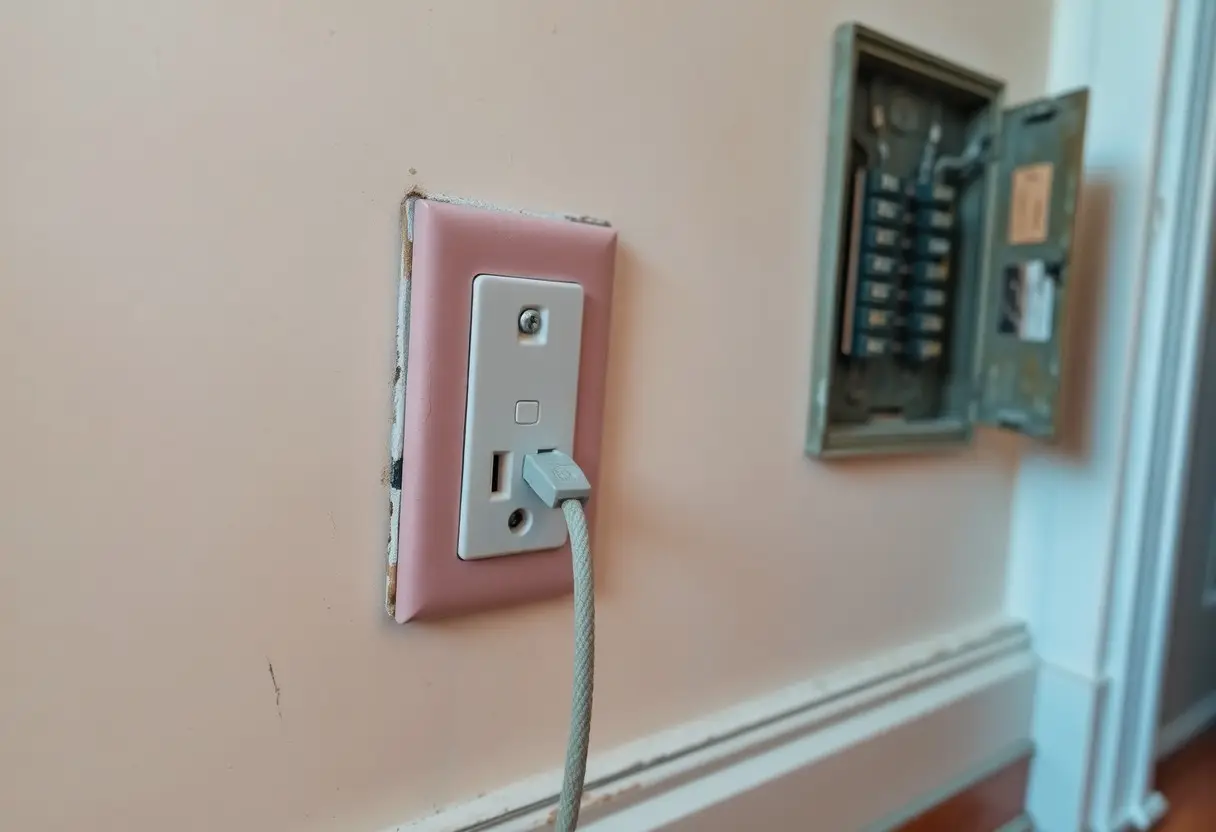
Home wiring in Rock Island often dates to mid-20th century construction, so you may find ungrounded two-prong outlets throughout your property; if you live in an older house, original knob-and-tube or two-wire systems are common reasons. You should be aware that these outlets pose a greater shock and fire risk, yet you can mitigate danger with cost-effective GFCI or grounding upgrades to better protect your devices and family.
Historical wiring practices in Rock Island
Local construction eras and common installation methods
Homes built in Rock Island during the 1890s-1930s often used knob-and-tube or cloth-insulated wiring, while 1940s-1960s houses commonly received early NM runs without a dedicated equipment ground. You’ll find knob-and-tube in attics and behind plaster, cloth-insulated wires in period bungalows, and two-conductor NM pulled through crawlspaces. Many renovations simply left those original circuits intact, which is why two-prong, ungrounded outlets remain widespread in older neighborhoods.
Typical materials (cloth-insulated, knob-and-tube, early NM cable)
Cloth-insulated cable uses rubberized inner insulation wrapped with woven cloth and often has brittle, oxidized rubber by age; knob-and-tube features separate hot and neutral conductors run on ceramic knobs with ceramic tubes through framing; early NM cable usually supplied two insulated conductors without a ground. You should treat these systems as higher risk for insulation failure and shock or fire if insulation is damaged or connections are loose.
In practice, cloth-covered cable commonly dates from the 1910s-1940s and shows surface fraying and cracked rubber insulation that can produce shorting or arcing; knob-and-tube, prevalent through the 1930s, relies on air cooling so bundled or modern replacements can overload circuits rated typically at 15-30 amps. Early NM introduced in the 1940s often omitted an equipment grounding conductor, leaving metal boxes and appliances unbonded. You can spot these systems by open ceramic supports, fabric-sheathed cable, or two-prong receptacles; municipal permits in mid-century renovations frequently allowed existing runs to remain, which explains why you still encounter them and why upgrading to grounded or GFCI-protected circuits is a common, effective mitigation.
Technical reasons outlets lack grounds
You encounter ungrounded outlets because many installations used only a hot and neutral conductor and builders avoided running a separate equipment grounding conductor to each receptacle; older systems like knob-and-tube or cloth‑insulated cable simply lacked a ground path. In Rock Island, houses built before the 1960s often still have those original circuits, increasing shock risk for modern electronics and appliances while complicating simple upgrades you might want to do today.
| Old two‑wire branch circuit | Hot and neutral only; no grounding conductor present |
| Knob‑and‑tube wiring | Separate conductors run without an equipment ground |
| Cloth‑insulated cable | Common pre‑1960s and often replaced without adding ground |
| Metal conduit exceptions | Conduit sometimes served as ground; when removed outlets became ungrounded |
| Code evolution | Grounding became widespread mid‑20th century; older homes predate that shift |
Absence of separate equipment grounding conductor
When your home was wired with only two conductors, there was no designated equipment grounding conductor to carry fault current safely; electricians relied on metal conduit or bonded metal boxes where available. That means your outlets lack the low‑impedance path that trips breakers quickly, and you face higher shock and fire exposure if a fault occurs – so you should evaluate each circuit before plugging in modern sensitive equipment.
Receptacle types and wiring configurations used historically
Two‑prong ungrounded receptacles dominated until mid‑century; you’ll also find adapters, older 3‑slot devices tied to neutral, and legacy methods like floating grounds. In Rock Island, many homes retain 2‑prong outlets or have mixed panels where some rooms were upgraded and others were not, which complicates protection for surge devices and GFCI retrofits you might consider.
- 2‑prong outlets – original, no ground conductor
- Knob‑and‑tube – separate conductors, common 1900-1930 peak
- Cloth‑insulated cable – typical early 20th century wiring
- Thou should inspect each outlet for labeling and conduct a continuity test to confirm the presence or absence of a ground
| 2‑prong receptacle | Hot + neutral only; no ground path |
| 3‑slot ungrounded | Often retrofit faceplate on two‑wire circuit; ground tied to neutral in incorrect fixes |
| Knob‑and‑tube | Open wiring; no equipment ground and insulation degradation risk |
| Cloth‑sheathed NM | Older NM cable lacking third conductor; common pre‑1940s-1950s |
| Metal conduit wiring | Conduit may provide grounding if intact and properly bonded |
You can expect patterns by era: knob‑and‑tube peaked early 1900s, cloth‑insulated wiring through mid‑century, and two‑wire NM persisted in many renovations; that history explains why your outlets are ungrounded. Upgrading usually requires adding a dedicated equipment grounding conductor or installing GFCI protection and labeling ungrounded receptacles when full grounding isn’t feasible.
- Era mapping – identify wiring by construction date and visible cable
- Upgrade options – run new ground conductors, use GFCI with labeling, or replace branch circuits
- Thou must document any non‑grounded outlets after installing GFCI protection, per safe practice
| Era | Likely wiring/receptacle |
| 1900-1930 | Knob‑and‑tube, no ground |
| 1930-1950 | Cloth‑insulated cable, two‑wire circuits |
| 1950-1970 | Nonmetallic sheathed without ground in some renovations |
| Post‑1970 | 3‑conductor NM and grounded receptacles common |
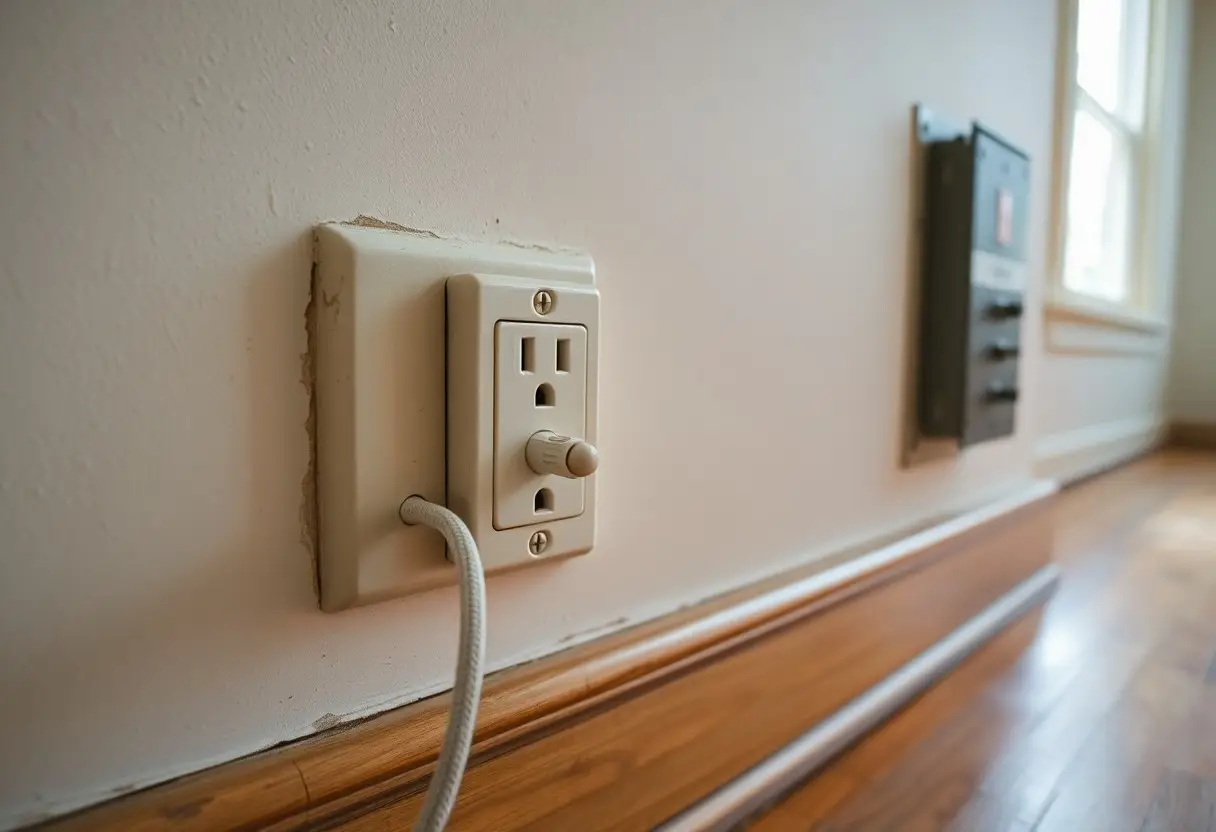
Safety implications
With ungrounded outlets in your Rock Island home, fault current lacks a defined path back to the panel, increasing the chance that metal appliance enclosures or exposed wiring become energized. Older two-prong receptacles were common in homes built before the 1960s, and they leave you with higher shock and fire risk; the NFPA cites roughly 50,000 electrical fires per year in U.S. homes from wiring and equipment failures, a vulnerability that ungrounded systems worsens.
Shock and fire risks associated with ungrounded outlets
When a hot conductor contacts a metal appliance and there’s no ground, you can become the path to earth, producing painful or deadly shocks; currents as low as 5-30 mA can cause severe muscle spasms, while >100 mA risks ventricular fibrillation. Adapters that convert three-prong plugs to two-prong do not create a safe ground, and although a GFCI will trip around 4-6 mA imbalance to protect you, it doesn’t reduce long-term fire risk from improper bonding or degraded insulation.
Interaction with modern electronics and surge susceptibility
Modern devices use switching power supplies and sensitive electronics that rely on a stable reference to ground; without it, you face increased electromagnetic interference, data corruption, and reduced surge protector effectiveness. Surge events can reach thousands of volts, and common plug-in surge strips need a true equipment ground to divert that energy-so ungrounded outlets leave your TVs, computers, and smart-home gear far more vulnerable to damage.
In practice, you’ll see failures from transient overvoltage’s and EMI: for example, a laptop power supply can be permanently damaged by a surge of a few hundred volts on the line, and SSD/controller logic is especially susceptible to spiking transients that cause data loss. Protecting your systems often requires a multi-layer approach: install a licensed electrician to add a proper grounding conductor or install a panel-mounted Type 2/whole-house SPD at the service (Type 1 at the meter if local utility allows), and use grounded point-of-use protection where available. Whole-house SPDs typically run about $300-$700 installed and will divert large surge energy to earth, while a GFCI outlet labeled “No Equipment Ground” can give personal shock protection but won’t replace a true ground for surge suppression or EMI control.
How to identify ungrounded outlets
When you suspect an outlet is ungrounded, combine tools and visual checks: use a plug-in tester to read LED codes, verify with a multimeter set to AC volts (expect ~120 V between hot and neutral), and inspect the box and wiring for a grounding conductor. If a tester reports an open ground or the outlet is two-prong, treat it as ungrounded until a continuity check or electrician verification confirms otherwise.
Using plug-in testers and multimeters safely
Always shut off the breaker before removing the cover and wear insulated gloves when probing. A three-prong plug-in tester reads common wiring faults quickly-LED patterns show open ground, reversed polarity, or neutral/hot issues-but it can’t detect a false (bootleg) ground. When using a multimeter, set it to AC volts, confirm ~120 V hot-to-neutral, and to verify grounding continuity measure resistance to a known ground with the breaker off.
Visual clues during inspection (metal boxes, grounding screws, wiring type)
You’ll often spot an ungrounded outlet by its physical features: two-prong receptacles, cloth-insulated or cloth-sheathed wiring, and the absence of a bare copper or green-insulated grounding conductor. A metal box without a visible grounding screw or bonding pigtail usually means no equipment ground, whereas conduit or a ground screw with a pigtail attached indicates a bonded system.
When you remove the cover, check whether the metal box has a grounding screw with a wire looped to the receptacle; that wire should be bare copper or green. If the box is fed by threaded metal conduit, continuity can exist through the conduit if fittings are tight and intact. Examples: many Rock Island homes built before the mid-1960s used two-wire cloth cable, so finding no ground is common; if you see cloth insulation or only two conductors, plan for a full bonding test or a licensed electrician’s evaluation rather than assuming the outlet is safe.
Options for remediation
You have several remediation paths: run new grounding conductors to the panel, fully rewire circuits with modern NM-B or conduit, or use targeted alternatives like GFCI retrofits. Running grounds avoids outlet conversions but can cost $50-$250 per outlet depending on access; full rewiring of a room often ranges $1,000-$4,000. Prioritize continuous, bonded grounding where feasible.
Upgrading circuits: running new grounding conductors or replacing wiring
You can run an equipment grounding conductor (EGC) from each receptacle to the service panel, typically using #12 copper on 20A circuits per NEC 250; the ground must be continuous and bonded at the panel. If you find cloth, knob-and-tube, or aluminum wiring, plan full replacement-expect $8,000-$20,000 for a 1,200-1,800 ft² bungalow in Rock Island due to wall access and labor.
Alternatives: GFCI retrofits, two-prong to three-prong conversions and labeling
GFCI retrofits let you protect ungrounded outlets without creating a ground: install a GFCI receptacle or breaker and label protected outlets “No Equipment Ground” as required by code. Typical GFCI installation costs $60-$200 per outlet; one upstream GFCI can protect downstream outlets via load terminals. GFCIs protect against shock but do not provide an equipment grounding conductor.
If you pick GFCI, test and tag each outlet and locate the protecting device where you can reset it; GFCIs typically trip at about 5 mA of imbalance and can nuisance-trip with shared neutrals or motor loads. Converting to a grounded three-prong is valid only if you run a proper bonded EGC to the panel or a verified metal box; never use unbonded “cheater” adapters and avoid bonding to isolated water piping downstream of the meter. In one Rock Island retrofit, installing three GFCIs saved a homeowner $1,200 versus rewiring the small kitchen run.
Local code, permits, and professional guidance
Evolution of NEC requirements and grandfathering considerations
Since the 1970s the NEC tightened rules so new residential builds require grounded receptacles and selective GFCI/AFCI protection; older Rock Island homes are often grandfathered, meaning existing two‑wire outlets can remain until you alter the circuit. When you replace a non‑grounding receptacle the NEC allows installing a GFCI and labeling it “No Equipment Ground” if a grounding conductor isn’t available (see NEC provisions on replacement receptacles), but full grounding is required when you run new wiring.
When to hire a licensed electrician and what inspectors will look for
You should hire a licensed electrician for knob‑and‑tube removal, aluminum wiring issues, installing new circuits, or if you experience shocks or frequent breaker trips; inspectors will check for grounding conductor continuity, proper bonding at the service panel, correct wire gauge (14/2 for 15A, 12/2 for 20A), GFCI/AFCI where required, outlet spacing, and box fill. Failing to get a permit or using improper fixes can lead to a failed inspection or a safety hazard.
When an electrician pulls a permit they usually schedule a rough‑in and final inspection: the inspector will use a meter to verify ground continuity, confirm the grounding electrode/bonding at the panel, verify GFCI/AFCI installation and labeling, and check that any replacements comply with code; simple GFCI replacements often pass immediately, while full rewiring can require drywall access, documented work, and may trigger additional required upgrades to meet current code.
To wrap up
The prevalence of ungrounded outlets in Rock Island homes reflects an older housing stock and historical wiring standards: many houses were built before grounding became code, rewiring is costly or disruptive so homeowners postpone upgrades, and local preservation or DIY repairs often leave two‑prong receptacles in place; you should prioritize assessing your outlets, consider professional rewiring or installing GFCI replacements, and weigh safety and equipment protection when planning electrical work.