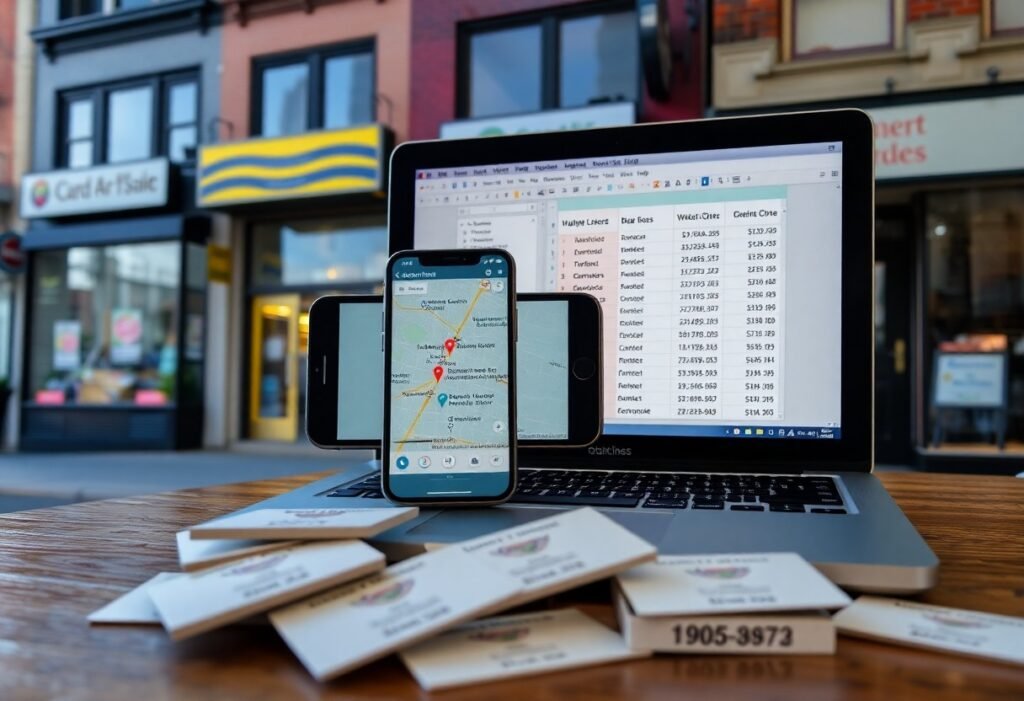

With Google’s geographic signals, you learn how location data shapes search rankings; accurate location info boosts visibility while misleading signals can cause ranking drops, so you must align content, structured data and citations to gain local relevance.
Core geographic signals
Geography affects ranking via local links, structured data, and user intent; you should prioritize consistent NAP, authoritative local backlinks, and accurate geotags to signal relevance.
On-page signals: NAP, geotags, and schema
Ensure your pages show consistent NAP, precise geotags, and well-implemented schema so you avoid conflicting signals that confuse crawlers and users.
Landing pages and localized content
Tailor landing pages to neighborhoods or languages, giving unique localized content and contact details so you improve relevance while avoiding duplicate pages that dilute authority.
Include clear address, service-area info, localized headings, customer reviews, and map embeds so you present strong local relevance; you should use structured schema, unique copy, localized CTAs, and internal links while avoiding doorway pages, thin templates, or inconsistent NAP that can trigger ranking drops.
Off-site and citation signals
Off-site signals show Google where you matter beyond your site, with consistent NAP and reputable mentions improving local relevance, while conflicting entries or spammy links can reduce visibility.
Local citations and directory consistency
Citations across directories help Google validate your presence; keep your business name, address, phone identical everywhere to prevent ranking drops and customer confusion.
Backlinks, reviews, and social proof
Backlinks and reviews indicate authority: genuine recommendations from local sites lift visibility, whereas fake reviews or low-quality links create reputational risk.
Additionally, you should solicit authentic reviews, respond promptly to negatives, and earn links from authoritative local sites; avoid link schemes or purchased reviews since they invite spam penalties and long-term harm.

Technical and site-architecture signals
Technical and architecture choices influence how Google associates pages with locations; you should audit server headers, hreflang, and indexability to avoid mislocalization. Misconfigured hreflang or blocked crawling can sever geographic signals, while clean sitemap and canonical rules strengthen local relevance.
Server location, hreflang, and canonicalization
Server location affects latency-based signals, but you should rely more on hreflang and correct canonical tags to declare regional intent; misapplied canonicals or missing hreflang can cause Google to index the wrong country version.
URL structure, sitemaps, and crawlability
Structure your URLs to reflect regions (ccTLDs, subfolders, or parameters) consistently, and provide a clean sitemap so Google can discover regional pages; blocked or duplicate paths weaken geographic signals.
Ensure you choose URL approaches that match business goals: ccTLDs for country targeting, subfolders for centralized control, subdomains when separation is needed. Keep sitemaps updated with hreflang entries, avoid robots or canonical rules that block regional pages, and monitor Search Console for indexing or crawl errors that could nullify your geographic intent.
User and behavioral signals
Search behavior – clicks, dwell time, and repeat visits – signals geographic interest to Google, so you directly shape local rankings through consistent interaction and engagement and repeat signals.
Query intent, click behavior, and engagement
Clicks and query phrasing reveal intent; when you prefer nearby results and spend time on them, Google increases that content’s local relevance using click-through and dwell time metrics.
Device location, location history, and personalization
Device GPS, IP address, and Wi‑Fi signals combine with your location history to personalize results; you may see different rankings based on recent and frequent locations.
Additionally, Google weights your device’s precise GPS and aggregated movement patterns to infer home/work areas; you can limit this by disabling Location History or clearing stored locations to reduce personalization and protect privacy.
Maps, Business Profile, and Knowledge Graph
Balancing Maps, Business Profile, and the Knowledge Graph requires you to align NAP consistency, structured data, and local context so Google correctly associates your place with queries.
Google Business Profile signals and optimization
Optimizing your Google Business Profile means filling categories, updating hours, encouraging reviews, resolving duplicates, and preventing spam to improve local visibility.
Local Pack, Maps ranking factors, and KG presence
Improving Local Pack placement depends on relevance, distance, and prominence, so you should manage citations, local links, and user engagement to influence Maps ranking.
- Google Business Profile
- Local Pack
- The Knowledge Graph
Additionally, you can influence Maps ranking by focusing on review velocity, behavioral signals, and local link authority. The algorithm weighs proximity, relevance, and prominence differently based on intent.
- proximity
- relevance
- The prominence
Handling ambiguity and multi-location setups
When you manage multiple locations, ambiguous signals like inconsistent addresses or mixed service areas can dilute local relevance; align NAP, schema, and landing pages to preserve ranking. Fixing these reduces confusion and provides clearer visibility while avoiding the risk of misclassification.
Conflicting signals and service-area businesses
If your service-area business lists a public storefront while serving broader regions, Google may prioritize one signal over another; ensure your Google Business Profile reflects a service area, avoid visible inconsistent addresses, and use clear service-area pages to prevent visibility loss or incorrect local ranking.
Best practices for clarity and scale
Deploying consistent NAP, canonical location pages, and structured data across sites helps you scale without creating conflicting signals; centralize management, use unique landing pages per location, and monitor citations to protect local authority and avoid duplicate or suppressed listings.
Standardizing your location data across CMS, GMB, third-party directories, and schema reduces signal conflict; you should use a central spreadsheet or API, audit citations monthly, geotag images, and implement hreflang for region variants. These actions increase indexing reliability and lower the risk of ranking fragmentation.
Conclusion
Summing up, you must align content, structured data, hosting, backlinks, and local signals so Google can accurately interpret geographic intent and deliver relevant local search results.