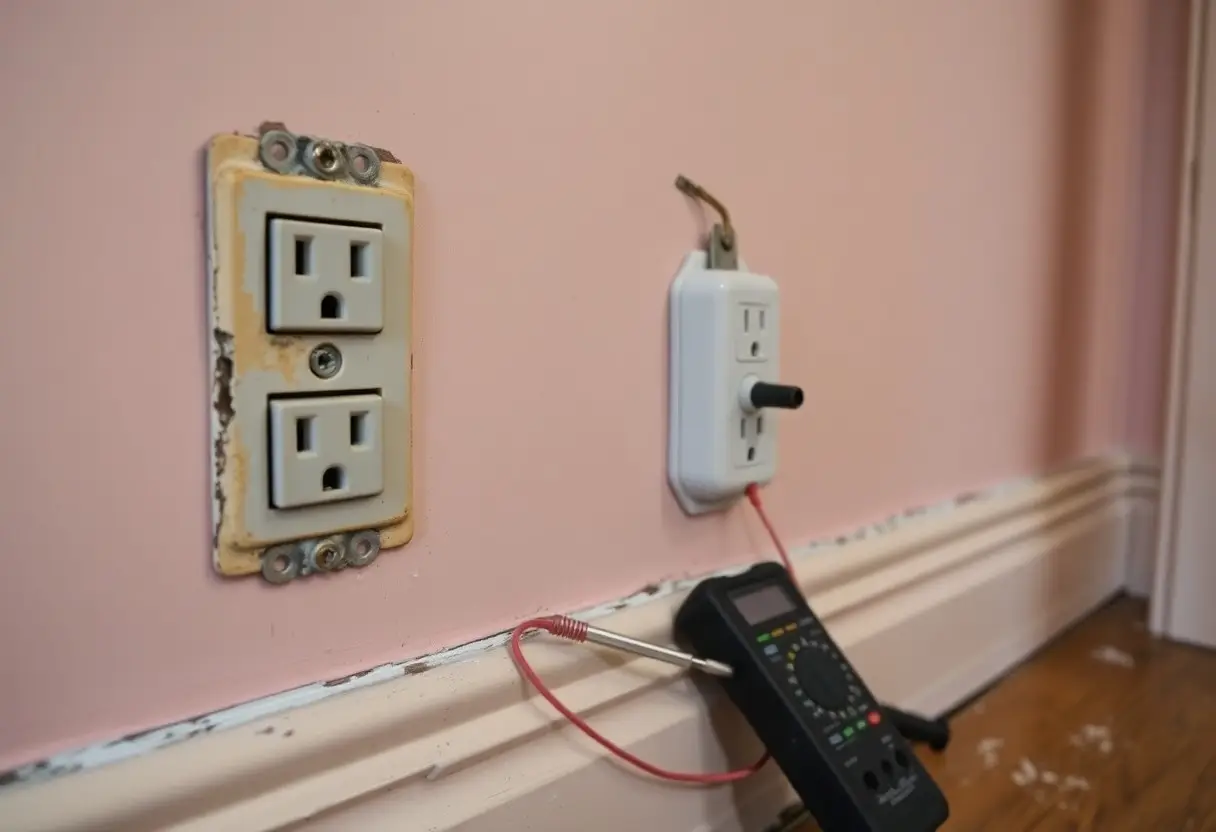
It’s wise for you to schedule an inspection to identify outdated wiring, overloaded circuits, and frequent breaker trips that signal a fire hazard; have a licensed electrician check insulation, grounding, and panels, and recommend safety upgrades like AFCI/GFCI protection and modern breakers to reduce risk and restore peace of mind.
Assessment & Prioritization
When you assess older Rock Island homes, focus on the systems most likely to fail: service panels often rated 60A, ungrounded two‑prong outlets, and legacy wiring like knob‑and‑tube or aluminum. Use a simple risk matrix – likelihood versus consequence – to rank items; for example, visible arcing or burning gets top priority, while missing outlet covers is lower. Typical upgrades include moving to 100A-200A service and adding GFCI/AFCI protection to reduce fire and shock risk.
Visual inspection checklist for older Rock Island homes
Scan the panel for burn marks, loose/buzzing breakers, and double‑tapped breakers; check outlets for two‑prong only, warm faceplates, or paint covering grounds. Inspect attics/basements for exposed cloth insulation, knob‑and‑tube runs, and aluminum conductors labeled “AL.” Note extension cord overuse, overloaded power strips, and >3 appliances on one circuit. Photograph observations, tag problem locations, and log breaker labels and service amperage.
Prioritizing hazards and immediate remediation steps
If you detect arcing, smoke, or sparking, shut off the affected circuit or the main service and call a licensed electrician immediately; treat arcing, burning smells, and hot panels as top emergencies. Next, address ungrounded outlets in wet areas by installing GFCIs, and plan panel upgrades for services under 100A. For aluminum wiring, schedule a mitigation/repair because it raises fire risk and insurance concerns.
Triaging should be systematic: first isolate hazards (label and turn off circuits showing heat or shock), then document with photos and measurements (voltage, panel rating). Get written estimates – expect a typical panel replacement to run about $1,200-$3,500 and full rewire or knob‑and‑tube removal often $1,500-$6,000 depending on house size. Prioritize fixes that remove live exposure and stop arcing before cosmetic or convenience upgrades.
Common Wiring Types & Hazards
- Knob-and-tube
- Cloth-insulated
- Aluminum wiring
- Ungrounded circuits & old panels
- Hidden splices & degraded insulation
| Knob-and-tube | Installed ~1880s-1940s; no grounding, exposed conductors and hidden splices increase fire risk. |
| Cloth-insulated | Common pre-1940s; insulation frays and absorbs moisture, raising leakage and arcing potential. |
| Aluminum wiring | Widely used in 1960s-1970s; thermal cycling and oxidation cause loose, high-resistance connections and arcing. |
| Ungrounded/old panels | Two-prong outlets, fuse boxes, and unlabeled breakers lack modern safety devices like GFCI and AFCI. |
| Hidden splices & coverings | Buried knob-and-tube or splices in walls/insulation mask overheating; infrared scans and probing are needed during inspection. |
Knob‑and‑tube and cloth‑insulated wiring: risks & testing
You’ll find knob-and-tube and cloth-insulated wiring in many Rock Island homes built before 1950; they lack grounding and their cotton/silk or rubber jackets often become brittle after 70+ years. Use insulation-resistance testing, circuit mapping, and an infrared scan to detect hotspots and hidden splices, and have a licensed electrician inspect junctions because degraded insulation and uncovered conductors significantly raise your fire and shock risk.
Aluminum wiring and aging connections: mitigation options
If your home has aluminum branch circuits (common 1960s-1970s) you face loose connections and oxidation that elevate heat and arcing. The effective mitigation methods are COPALUM crimp pigtails, listed mechanical connectors like AlumiConn, or full circuit replacement with copper; each option must be done by someone trained and listed equipment should be used to lower your fire risk.
You should weigh repair versus replacement: COPALUM uses a cold-weld crimp requiring a certified technician and provides a permanent copper pigtail, while AlumiConn connectors allow a do-not-solder mechanical splice at outlets and switches; manufacturers and testing labs report those listed methods cut connection failures that originally caused many documented post-connection fires, so prioritize pigtailing all terminations rather than relying on ordinary wire nuts or anti-oxidant alone. Assume that you will hire a licensed electrician to evaluate and implement the listed repairs when aluminum wiring or degraded insulation is present.
Outlets, Switches & Grounding
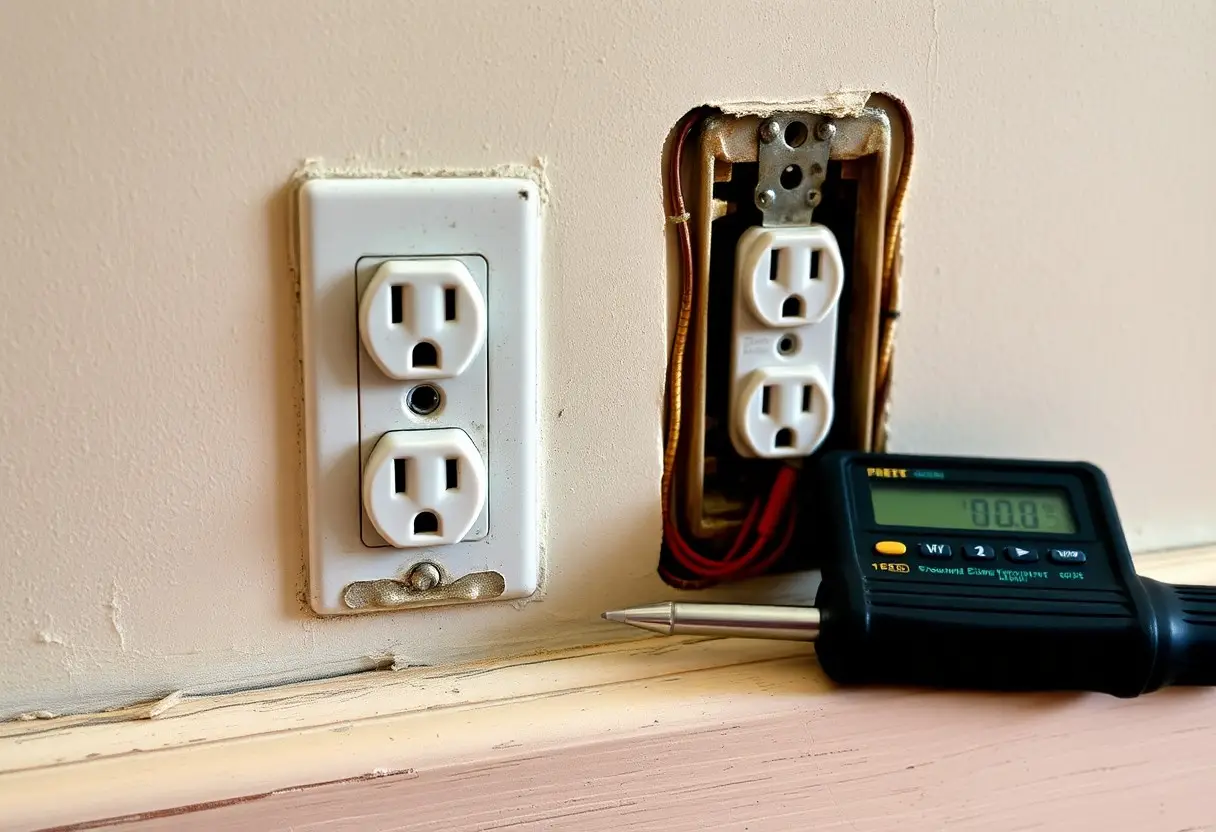
In older Rock Island homes you often find two‑prong outlets, open grounds, and loose switch connections that cause arcing and heat. You should test receptacles with a plug‑in tester and a voltage meter: reversed polarity and open neutral are common in houses built before 1960. If you detect flicker, buzzing, or warm faceplates, those are signs of dangerous connections that merit immediate repair by a licensed electrician.
Grounding, polarized outlets, and three‑prong conversions
If your home has two‑slot receptacles, you cannot safely install a three‑prong outlet without a true equipment grounding conductor. You can run a new ground to the panel, bond to approved metallic conduit, or install a GFCI and label it “No Equipment Ground.” Never tie the ground to the neutral at the receptacle; that creates a hazardous return path and violates safe practice.
GFCI, AFCI, and tamper‑resistant receptacles
GFCIs trip on leakage around 4-6 mA to prevent shock, while AFCIs detect dangerous arcing patterns that lead to fires; tamper‑resistant receptacles block foreign object insertion and have been required in new construction since 2008. You should prioritize GFCIs for baths, kitchens, garages and outdoors, and AFCIs for bedrooms and living areas to reduce electrocution and fire risk.
When you retrofit, consider combination devices: dual GFCI/AFCI units are available for branch circuits and simplify compliance. In practice, a GFCI installed on an ungrounded circuit will protect you electrically if labeled correctly, and an AFCI will often identify degrading wiring before visible damage occurs. For homes with aluminum or knob‑and‑tube remnants, pairing AFCI protection with circuit replacement reduces fire incidents more effectively than outlet swaps alone.
Panels, Breakers & Service Equipment
In older Rock Island homes you’ll often find 60A or 100A service panels that were fine decades ago but strain under modern loads; a typical whole-house demand today favors 200A. Watch for warm panels, buzzing, burning smells, discolored insulation, or paint flaking around the enclosure-these are signs of loose connections or overloaded bus bars. When you see antiques like screw-in fuses, plan for evaluation and likely upgrade to meet today’s appliance and safety needs.
Identifying overloaded circuits, fused panels, and upgrade triggers
Frequent trips, flickering lights when the AC kicks on, or a 15A lighting circuit running multiple space heaters signal overload. Fused panels with 30A-60A mains or mixed fuse types often lack modern branch protection and are common upgrade triggers. You should prioritize homes with aluminum branch wiring, Federal Pacific or Zinsco breakers, or additions such as HVAC, electric ranges, or an EV charger-each can push load beyond what the original panel was designed to handle.
Service grounding, bonding, and meter/main concerns
Many older services lack a proper grounding electrode system or have a single corroded 8‑ft ground rod; modern practice often uses two rods or a Ufer concrete-encased electrode. Pay attention to loose neutrals at the meter or main, which cause voltage swings and can damage electronics-this is one of the most dangerous faults you’ll encounter. Also inspect the meter socket for corrosion or burned lugs, which indicate poor connection and overheating.
In one Rock Island retrofit, a 1920s house with a 60A fused service experienced repeated appliance failures due to a degraded meter socket and a missing bonding jumper to the water service; replacing the meter/main with a 200A meter‑main, installing two 8‑ft ground rods, and bonding the water pipe within 5 ft of entry eliminated neutral-induced voltage fluctuations. When you assess meter/main gear, look for secure clamped conductors, intact insulation, and evidence of past overheating-those dictate whether a simple repair or full service upgrade is warranted.
Safety Devices, Detectors & Surge Protection
You should verify that detectors and surge safeguards are present and functioning: NFPA guidance calls for smoke alarms inside each bedroom, outside sleeping areas and on every level, while CO alarms belong outside sleeping areas and on each floor. Test alarms monthly, replace smoke units every 10 years and CO detectors every 5-7 years, and pair a whole‑house surge protector with point‑of‑use strips to protect sensitive electronics and major appliances.
Smoke and carbon monoxide detectors: placement and maintenance
Place smoke alarms on ceilings or high on walls, at least 4 inches from the junction of wall and ceiling and away from drafts; put CO detectors outside sleeping areas and near attached garages. You should test alarms monthly, vacuum dust from vents, and swap batteries annually unless you have sealed 10‑year cells. Interconnected alarms provide earlier warning across the house, and CO is odorless and can be lethal, so install and maintain detectors rigorously.
Whole‑house surge protection and appliance safety
Install a whole‑house surge protector at the main service panel to block upstream transients; typical units list surge‑current ratings in the 20-65 kA range and are most effective when paired with point‑of‑use protectors (600-4000 joules). Protect HVAC systems, refrigerators, sump pumps and entertainment centers, since a panel‑mounted SPD diverts large external surges before they reach branch circuits and costly equipment.
Choose the right SPD type and have a licensed electrician install it: Type 1 (service entrance) or Type 2 (panel) devices should be coordinated with Type 3 point‑of‑use protectors for lowest clamping voltages (often ~330-600 V). Expect parts-plus‑labor costs roughly $200-$800, check MOV status indicators and warranty, and note that SPDs reduce surge damage but won’t fully stop a direct lightning strike, so grounding and bonding matter.
Hiring Professionals, Permits & Local Resources
Selecting a licensed electrician: questions, estimates, and references
Get at least three written estimates and ask each electrician for their license number, proof of insurance, and examples of work on homes from the 1900s-1940s; those with knob‑and‑tube or cloth insulation need special handling. Ask whether permits are included, whether quotes are fixed or time‑and‑materials, and for two recent references for similar projects. Watch for red flags like no written contract or no insurance-these increase your liability. Typical panel upgrades run about $1,500-$4,000.
Rock Island codes, permits, utility coordination, and assistance programs
Most electrical work in Rock Island requires city permits and inspections to meet the National Electrical Code as adopted locally; permit fees often range from $50-$200 depending on scope. Coordinate with your utility before service upgrades or meter work-lead times can be 2-6 weeks. You may qualify for assistance through LIHEAP, Weatherization programs, or local housing rehab grants that offset replacement or upgrade costs.
Contact the Rock Island Building & Engineering office with your parcel/tax ID, detailed scope, and contractor license to start the permit process; expect at least a rough and final inspection for major installs. If work proceeds without permits you risk stop‑work orders, mandatory rework, and possible insurance denial for future claims, so have your electrician handle permit pulls and scheduling to avoid delays.
Summing up
From above, you should treat electrical safety checks as routine maintenance for older Rock Island homes: engage a licensed electrician to inspect wiring, grounding, panels and GFCIs; correct degraded insulation and overloaded circuits; update outlets and detectors to current code; and document repairs so your household risk is minimized.